
What is United States Oil Tokenized Fund (USOON) Coin?




In an exciting development for crypto enthusiasts, the United States Oil Tokenized Fund (Ondo) Coin, abbreviated as USOON, has been newly listed on WEEX, with trading open from January 19, 2026. This milestone enables traders on WEEX to engage with USOON/USDT, presenting a fresh opportunity to delve into the unique niche of tokenized assets. Designed to reflect the value of United States Oil, USOON offers a digital approach for both investors and institutions to tap into the oil market using blockchain technology.
United States Oil Tokenized Fund Introduction
USOON represents a digital token created by Ondo Finance, signifying a tokenized version of United States Oil. This forward-thinking initiative allows non-U.S. retail and institutional investors to seamlessly mint and redeem these tokens, thereby granting them access to U.S. stocks and ETFs’ liquidity five days a week on a 24-hour basis. This innovative bridge merges traditional asset classes with the agility of digital trading, enhancing liquidity and accessibility for investors worldwide.
Who Created United States Oil Tokenized Fund Coin?
The United States Oil Tokenized Fund Coin, USOON, is a product of the innovative minds at Ondo Finance. Ondo Finance is a prominent player in the field of tokenization, specializing in transforming traditional financial assets into digital representations on a blockchain. Their vision is to democratize access to a broader range of investment vehicles, and the creation of USOON is a testament to their commitment to this mission.
How Does United States Oil Tokenized Fund Crypto Work?
The mechanism behind USOON involves the tokenization of physical assets — specifically, United States Oil. When investors purchase USOON, they engage in a process similar to owning a fractional share of the underlying oil asset. Ondo Finance deploys smart contracts to manage and audit these token transactions, ensuring transparency and security. This tokenized system supports fractional ownership, providing an innovative way for the global market to participate in energy commodities.
How is United States Oil Tokenized Fund Crypto Used?
USOON is primarily used by investors looking to diversify their portfolios with digital assets that have traditional financial underpinnings. The token allows users to have exposure to the oil market without needing to physically own or handle any oil. This makes it a versatile tool for hedging, speculation, or straight-up investment in commodities using a blockchain-based medium. Through the 24/5 trading cycle, users can react to market fluctuations and manage their investments with greater flexibility.
How Do You Buy United States Oil Tokenized Fund (USOON)?
Purchasing USOON on WEEX is a straightforward process. Before you start trading, you need to register on WEEX if you’re a new user, or simply log in on WEEX if you already have an account. Once you’re logged in, navigate to the trading section to trade USOON USDT. This simple process connects you with USOON, allowing you to include this innovative token in your investment strategy.
Is United States Oil Tokenized Fund (USOON) Coin a Good Investment?
Determining whether USOON is a suitable investment depends on several factors, including market conditions and individual portfolios. As of the latest analyses, USOON offers an attractive option for those seeking diversification in their crypto assets with a stable backing of physical commodities—oil. Current market trends suggest a growing interest in tokenized assets, which could potentially enhance the demand and value of USOON over time.
However, potential investors should consider the volatility of oil prices and the crypto market. While integrating the benefits of blockchain technology with traditional commodities offers exciting growth opportunities, these investments inherently carry risks. Price forecasts remain speculative and subject to abrupt changes, and it’s crucial for investors to stay informed and consider these elements within the broader context of their financial situation.
USOON stands as a novel gateway to the oil market through digital means. Its tokenized structure delivers enhanced liquidity and the potential for substantial returns in a technologically evolved finance era. As always, thorough research and consideration of personal risk tolerance are recommended.
DISCLAIMER: WEEX and affiliates provide digital asset exchange services, including derivatives and margin trading, only where legal and for eligible users. All content is general information, not financial advice—seek independent advice before trading. Cryptocurrency trading is high-risk and may result in total loss. By using WEEX services you accept all related risks and terms. Never invest more than you can afford to lose. See our Terms of Use and Risk Disclosure for details.
You may also like
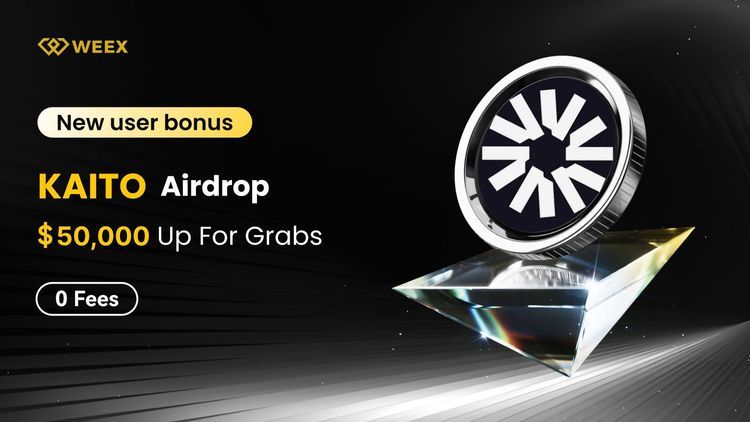
KAIO Airdrop: Share 50,000 USDT on WEEX with 0-Fee Trading
Trade KAIO/USDT with 0 fees on WEEX from May 7–14, 2026. New users can complete deposit and spot trading tasks to share 50,000 USDT in rewards.
What Is SAOS? Strategic American Oil Supply Token Explained
SAOS is a meme token on Solana with a 75,000 USD market cap and 22,000 USD locked liquidity, positioned around oil supply themes but lacking real asset backing
It thrives on pure narrative speculation, with no utility, website, or doxxed team, making it highly volatile and attention-dependent
Traders should distinguish SAOS from legitimate real-world asset projects, as its branding is speculative rather than substantive
Positive aspects include locked liquidity reducing rug pull risks, but low trading activity signals high uncertainty
How to Buy Public Asset Control (PAC) Token in 2026: Latest Solana Buying Guide
How to buy Public Asset Control (PAC) token in 2026, PAC contract address, Solana wallet setup, Jupiter swap guide, latest price, liquidity, and risks.
What Is Public Asset Control (PAC) Token and How Does It Work? Latest Solana PAC Token Guide
Public Asset Control (PAC) token explained. Learn what PAC is, how it works on Solana, current price snapshot, risks, and buying basics.

Can PAC Coin Reach $1 Soon? Analyzing Public Asset Control
PAC is a Solana-based meme token with a government-themed narrative, but it is highly speculative.
At its current price (~$0.0009) and 1B supply, reaching $1 would require a $1B market cap, which is very unlikely.
Short-term moves to $0.001 or $0.01 are more realistic, but the token is highly volatile due to low liquidity and hype-driven trading.
Overall, $1 is not a realistic target, and PAC is better suited for short-term speculation than long-term investment.

United Nations Oil Reserve (UNOS) Crypto: Solana Token, UN Links, and Risks
United Nations Oil Reserve (UNOS) Crypto explained: Solana token basics, UN links, oil-backing claims, market risks, contract checks, and buying cautions.

What Is Public Asset Control (PAC) Coin? Explained for Beginners
Public Asset Control (PAC) is a Solana-based token that uses a “government asset control” narrative involving oil and gold themes, but it has no verified ties to any real institutions or governments. It is mainly an entertainment-focused, speculative meme coin.
The project’s claims about links to entities like BlackRock or Palantir are unverified, and its own disclaimer states it is not a real financial or institutional asset. Like many new Solana tokens, PAC is highly volatile, with low liquidity and limited transparency, including no fully verified audit.
Overall, PAC is a high-risk speculative token driven by hype and storytelling rather than real utility. Beginners are advised to be cautious, verify contract details, and prioritize risk control before considering any trading.
What Is Official Saudi Oil Reserve (OSOR) Coin?
Learn what OSOR coin is, why its Saudi oil narrative matters, how to verify the contract, and what risks to check before trading.

Global Digital Oil Reserve (GDOR): What It Is, Risks, and How to Check It
Global Digital Oil Reserve (GDOR) is an oil-themed Solana token with unclear backing. Learn its risks, market data, and verification checklist.
Is OBC Crypto a Good Investment?
Is OBC crypto a good investment? We analyze the latest market data, holder concentration, liquidity risks, and short-term momentum. Read this before you invest in OBC token.

Can OSOR Reach $1? Full Price Analysis 2026
OSOR crypto price prediction 2026: Can Saudi Oil Reserve token reach 1? Read before buying.

What is International Oil Supply (IOS) Coin?
Wondering what is IOS crypto? Here’s a straight look at International Oil Supply (IOS) coin—the Solana token tied to oil reserve data. Contract address, risks, and what’s still unverified.

What Is the Unified International Token (UNIT)? Is UNIT Crypto Legit or Scam?
what is UNIT crypto? Here’s a breakdown of the Unified International Token ($UNIT), how it ties to BRICS+ data, where to buy it, and why it’s a conceptual project—not an official currency.
What Is Stablecoin Business OS (SBOS) Coin?
What is SBOS crypto? We break down Stablecoin Business OS, its USDC invoicing tools, AI finance assistant, token contract address, and real utility for online businesses.
World Collective Oil Reserve ($WCOR) Price Prediction: May 2026 Rally Analysis and Future Outlook
Is $WCOR a good investment? Read our comprehensive World Collective Oil Reserve price prediction and market analysis for 2026-2030. Learn about the energy narrative on Solana and start your trading journey with WEEX rewards.

How to Buy $WCOR Coin: Should I Invest or Is It Just Hype?
Learn how to buy $WCOR coin on Solana and explore its latest 57% price surge. This expert guide analyzes whether WCOR is a solid investment or speculative hype.
Is OSOR Token Next 10X Like WCOR or Just Market Hype?
Is OSOR the next 10X crypto like WCOR or just market hype? Compare OSOR vs WCOR on-chain data, price discrepancies, and holder risks in this deep dive into Saudi oil-backed tokens.

Is $PAC Token a Good Investment in 2026? Price, Risks, and Market Analysis
A data-driven analysis of Public Asset Control (PAC) token: current price, market cap, liquidity, $1 target feasibility, and risk factors. Is it a legitimate investment or a high-risk meme coin?
KAIO Airdrop: Share 50,000 USDT on WEEX with 0-Fee Trading
Trade KAIO/USDT with 0 fees on WEEX from May 7–14, 2026. New users can complete deposit and spot trading tasks to share 50,000 USDT in rewards.
What Is SAOS? Strategic American Oil Supply Token Explained
SAOS is a meme token on Solana with a 75,000 USD market cap and 22,000 USD locked liquidity, positioned around oil supply themes but lacking real asset backing
It thrives on pure narrative speculation, with no utility, website, or doxxed team, making it highly volatile and attention-dependent
Traders should distinguish SAOS from legitimate real-world asset projects, as its branding is speculative rather than substantive
Positive aspects include locked liquidity reducing rug pull risks, but low trading activity signals high uncertainty
How to Buy Public Asset Control (PAC) Token in 2026: Latest Solana Buying Guide
How to buy Public Asset Control (PAC) token in 2026, PAC contract address, Solana wallet setup, Jupiter swap guide, latest price, liquidity, and risks.
What Is Public Asset Control (PAC) Token and How Does It Work? Latest Solana PAC Token Guide
Public Asset Control (PAC) token explained. Learn what PAC is, how it works on Solana, current price snapshot, risks, and buying basics.
Can PAC Coin Reach $1 Soon? Analyzing Public Asset Control
PAC is a Solana-based meme token with a government-themed narrative, but it is highly speculative.
At its current price (~$0.0009) and 1B supply, reaching $1 would require a $1B market cap, which is very unlikely.
Short-term moves to $0.001 or $0.01 are more realistic, but the token is highly volatile due to low liquidity and hype-driven trading.
Overall, $1 is not a realistic target, and PAC is better suited for short-term speculation than long-term investment.
United Nations Oil Reserve (UNOS) Crypto: Solana Token, UN Links, and Risks
United Nations Oil Reserve (UNOS) Crypto explained: Solana token basics, UN links, oil-backing claims, market risks, contract checks, and buying cautions.


