
 Buy Crypto
- Markets
 Futures
- Spot
- Copy Trade
- Earn
- More
Zhao Changpeng's autobiography, stories about family, rivals, and friends

In the summer of 2024, a man sat in a federal prison in California, using an old-fashioned computer without copy-paste functionality, relying on memory to type out the first draft of this book, word by word.
His name is Zhao Changpeng, the founder of Binance, known in the community as CZ.
Before entering prison, he was the helmsman of the world's largest cryptocurrency exchange platform, with over three billion users. After leaving prison, he was pardoned by President Trump. And during those 76 days, he slept on a moldy mattress that was only two to three centimeters thick, ate cereal that tasted like paper crumbs, listened to the constant sound of a flushing toilet throughout the night, and thought about how to provide free education for more children.
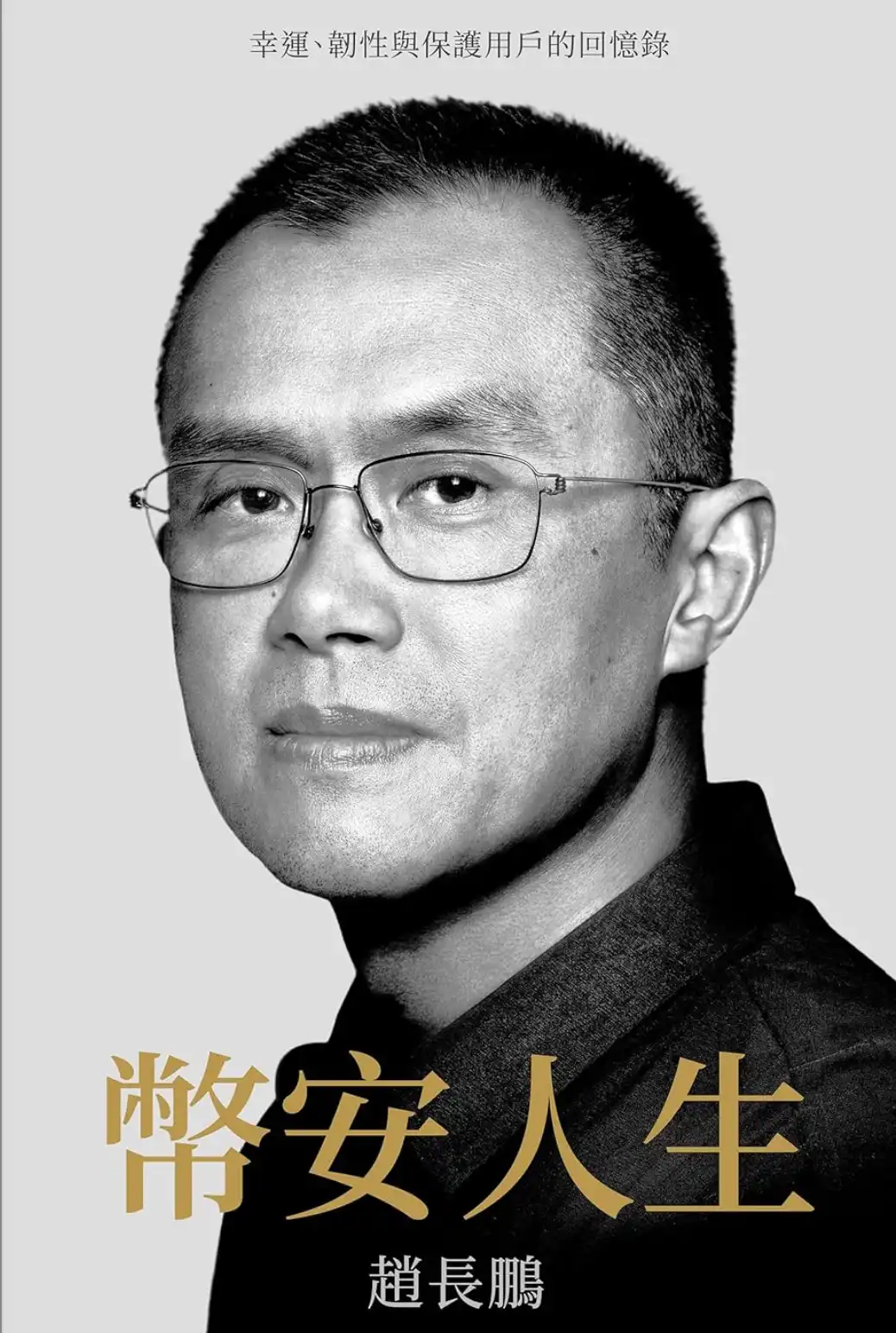
This book was written during that period. The BlockBets editorial team (with the help of AI, of course) has extracted and organized some of CZ's stories from the book for readers:
He Moved a Total of Eleven Times
In the book, CZ summarized, "I probably have to move every four years." The descriptions of each residence in the book vary greatly, with more detailed descriptions of the poorer places. Listed below in chronological order:
1. Qingkou Town, Jiangsu, around 1977-1982 (0-3 years old)
His birthplace, but CZ said, "I don't have many memories of Qingkou; all I know is what I've heard from my family."
2. Zhonghu Village, Jiangsu, around 1982-1987 (3-10 years old)
To have support, CZ's mother moved with CZ and his sister to Zhonghu Village near her maternal grandmother's house, where they lived in the teacher's dormitory of the village middle school.
The living conditions were extremely basic: two rooms, one for sleeping (with two beds taking up most of the space) and one serving as a living room, study, and dining room. The floor was dirt, without even a layer of cement. There was no running water; the nearest well was three hundred meters away, and CZ's mother carried a shoulder pole back and forth every day. Each person could only bathe using a single bucket of water, rarely bathing in winter. The village had no electricity for a long time. CZ used a kerosene lamp to do homework and only later got electricity, but it was only available for a few hours each day, with an inconsistent schedule.
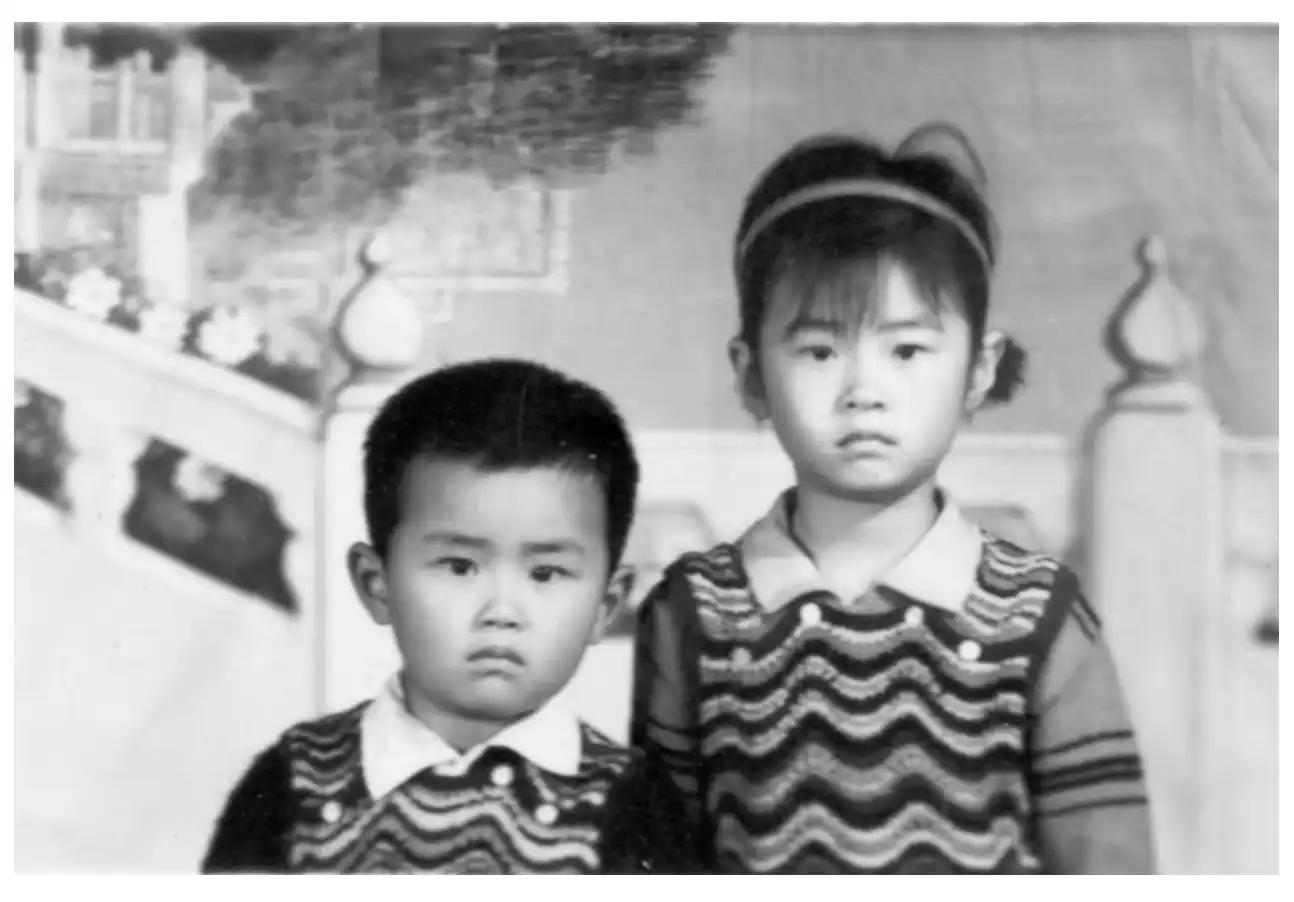
1982 Zhonghu Village, a photo of CZ and his sister
A few years later, a hand pump was installed in the yard, and CZ said this was the moment he "planted the seed of yearning for technology in his heart."
3. University of Science and Technology of China (USTC) Campus in Hefei, 1987-1989 (Ages 10-12)
His father was studying for a physics Ph.D. at USTC, and the whole family moved to Hefei. They first lived in a faculty dormitory, a single room, with the four of them sleeping in two bunk beds. The kitchen was a communal gas stove in the hallway, and the whole hallway would smell of cooking fumes during meal times. After a short while, they moved to a two-bedroom apartment: no living room, the master bedroom served as the living room, CZ and his sister shared the second bedroom, and the "space was so narrow that even turning around was a challenge." There was no bathing facility in the entire building, so they had to walk ten minutes to a public bathhouse.
4. University of British Columbia (UBC) Campus in Vancouver, 1989-1995 (Ages 12-18)
In August 1989, he immigrated to Canada with his parents. They first stayed in a UBC campus student dormitory room, with the four of them squeezing into two bunk beds. The bathroom and kitchen were shared, and they had a communal large refrigerator and dining table with students from various countries.
His father spent $7,000 CAD (seven months' income) to buy CZ an x286 computer. CZ said, "If it weren't for that computer, I might not be who I am today."
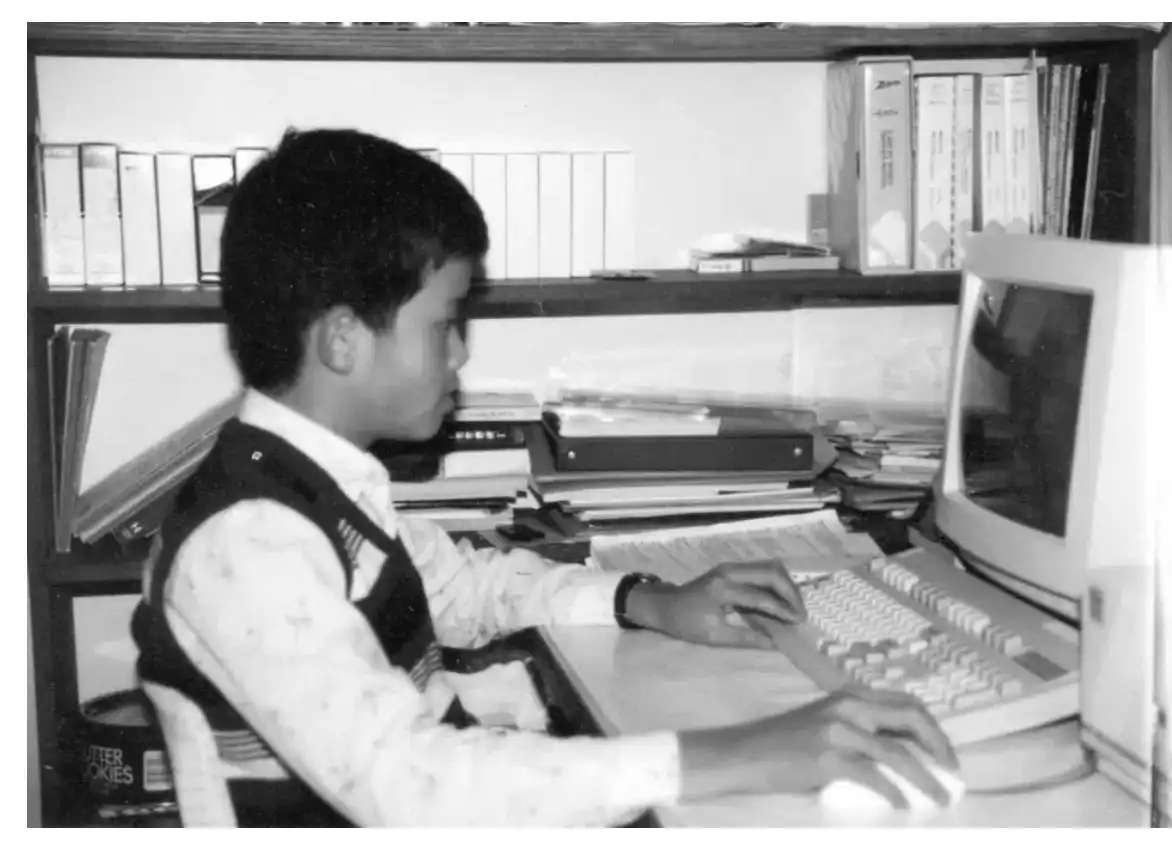
In 1990, CZ had his first encounter with a computer in Vancouver
A few weeks later, they moved into a townhouse in the UBC faculty housing area. CZ said this was "the most spacious place I've ever lived in." Downstairs was the kitchen and living room, upstairs were two bedrooms plus a small storage room, and there was a small garden in the front and back. However, each parent and his sister occupied a bedroom, and the small storage room became CZ's "room": a single mattress wedged in the middle of three walls, and he had to crawl in from the foot of the bed every day like digging into a cave to sleep, with no window. He said he oddly felt at ease, "Perhaps it was precisely because of this experience that I do not have claustrophobia."
During this time, CZ had multiple jobs: McDonald's, PNE dishwasher, night shifts at a Chevron gas station, volleyball referee, all while he was severely stuttering. He was able to overcome his stutter as a retired speech therapist provided him with free coaching.
5. McGill University in Montreal, 1995-1999 (Approx. Ages 18-22)
During university. In his freshman year, he rented an apartment off-campus (because it was cheaper than the dorms), but it ended up making him feel "completely solitary." His friends were all on campus, and he was always alone. The book says that at that time, there was "some inexplicable pressure building up inside him."
Summer interned twice in Tokyo, with accommodation covered by the company, but he quickly found out that "accommodation expenses were much higher than the salary".
6. Tokyo, around 1999-2001 (22-24 years old)
Didn't finish the last year of university and stayed to work in Tokyo. Rented a small room in Meguro, described in the book as: "Just enough space for a bed and a bookshelf, with a motorcycle parked next to the bed." The motorcycle was parked in the bedroom because it was unsafe outside.
The quality of life in Tokyo was the most comfortable period in the early part of the book: riding a motorcycle through the Rainbow Bridge, having dinner at Tokyo Bay, weekend trips to Hakone for hot springs, getting a PADI diving license, ranking in the top ten in CS matches in Tokyo, and meeting his wife Winnie in Tokyo.

In 2000, CZ riding a motorcycle in Hakone, Japan
7. New York Manhattan, 2001-2005 (around 24-28 years old)
Joined Bloomberg in November 2001. When the company moved, a professional moving company packed up everything from the tiny Tokyo house, even the trash cans, which CZ said was "a world of difference from my past moving experiences".
Upon landing in New York, Bloomberg arranged a serviced apartment for him on 59th Street in Manhattan, a one-bedroom apartment, which CZ said was "the most comfortable place I had ever lived in at that time". His sea shipment took two months to arrive, during which the transition period helped him adapt to the new city.
During his time at Bloomberg, he quickly rose through the ranks, leading a 60-person development team at 25, with an annual salary and bonus reaching $390,000 (in 2005). His child was born here, and out of family responsibility, he quietly uninstalled Counter-Strike.
8. Shanghai, 2005-2017 (28-40 years old, on and off)
Arrived in Shanghai in November 2005, founding a fintech company. Initially, he repeatedly practiced his speeches in the newly rented empty apartment, preparing for a media briefing. There is not much description of his residence during the Shanghai period, but he mentioned:
Bought an apartment in Pudong (referred to in the book as "That house was filled with too many memories: teaching the kids rollerblading, swimming, hosting birthday parties"), sold the house in 2013 for Bitcoin. This was his most family-centric residence depicted in the book, and it was the only house described with a family life theme. After selling it, he never had a place like that again.
In 2015, his family was in Tokyo, while he stayed in Shanghai to start a business, deciding to "just spend more time in the office."
9. Singapore, 2018 to end of 2021 (around 41-44 years old)
In 2018, after MAS stated that they would not regulate cryptocurrencies, CZ made Singapore his main base. He rented a three-bedroom sea-view apartment at Sentosa, with a good view, but "the cargo ship route outside the window was too noisy, so he had to close the windows tightly during meetings." Residential spaces in Singapore are generally small, with "my bedroom barely fitting a desk and a bed, and the remaining space making it difficult to even turn around." He used Grab for all his outings and did not buy a car.
During this time, he experienced FTX, his father's passing, and tightening regulations in multiple countries. In December 2021, he was forced to shut down the Binance Singapore site, and the process of applying for a work visa took more than nine months, forming a stark contrast with later obtaining a golden visa in Dubai on the same day.
10. Dubai, end of 2021 to present (44 years old-)
In late September 2021, his friend Gabriel suggested that CZ fly to Dubai. On the same day, he obtained a golden visa (in less than 12 hours, even on a weekend). By the fourth day in Dubai, he bought a second property to view, marking the first time he had bought a house in almost nine years since selling his Shanghai apartment in 2013. The book specifically explains why he has never bought a house before: "Houses cannot be moved, are troublesome to liquidate, and owning a house means dealing with procedures, maintenance, and property management, all of which consume my limited time and energy." This purchase was to "proactively make up for it," as he found out that investing or buying a house is usually required after obtaining a golden visa.
Dubai is highly efficient; within a month of his arrival, Binance signed a memorandum of understanding with the government, and within three months, received preliminary approval for a license, something that Singapore had not accomplished in several years.
11. US Federal Prison Lompoc II, June to August 2024 (around 47 years old)
Strictly speaking, it was a forced residence, but it is one of the most detailed residences described in the book. On the day he entered, he underwent a full-body search: palms up, arms raised, fingers through hair, open mouth, tongue up, ear check, then lift testicles, turn around, show feet, spread buttocks, bend over, cough three times, to ensure nothing was hidden in the anus.
After receiving a worn-out brown T-shirt and yellowed socks, CZ was assigned to Cell A5 in Block C: steel bunk bed, small cabinet, steel toilet with a small basin, and a plastic chair. The mattress was two to three centimeters thick, moldy and worn out, with a cold steel plate underneath. His cellmate, Jay, found him an old sweater that smelled of sweat, and he "accepted it without hesitation."
On the first day in prison, CZ didn't dare to take a shower, but sooner or later, he had to. Later, when he went, he found that it was not as scary as in the movies, but the shower room was so narrow that it was only as wide as his shoulders. The water could only run for 30 seconds, and the temperature couldn't be adjusted, often scalding hot. Everyone's solution was to wet a small towel first, let it cool for a while, and then use it to wash.
The entire prison area housed 200 male inmates, some with tattoos and a fierce look in their eyes. The toilet flushing sounded like a fighter jet and didn't stop all night. The food was described as "cereal that tasted like paper scraps" served with skim milk that was close to plain water.
Some prison guards were interested in cryptocurrency. When they recognized CZ, they asked, "Is it a good time to buy Bitcoin now?" CZ thought that if he said, "Yes, you should buy," and Bitcoin dropped the next day, what would happen. So, he uniformly replied, "I can't access the internet at all, I have no information, how would I know?" After that, the prison guards stopped asking.
After 76 days, he was transferred to a halfway house (similar to a university dormitory, with unlocked doors, housing around 40 inmates). After some time, he moved in with his sister to complete the final nine days of home confinement. His sister specially installed a landline for this purpose and underwent supervisor training.
In August 2024, he was released from prison. He walked out to the parking lot, stood there for 20 minutes waiting for his family to arrive. He then flew back to the UAE, and he said, "The moment I hugged my children and family again, I felt true happiness."
Crypto People and The Face
SBF: "Have our relationship deteriorated to the point where we don't even talk?"
In the book, the first description of SBF mentioned was: having a unique style of playing video games during business meetings.
The first time CZ met Sam Bankman-Fried (SBF) was at the January 2019 Binance Blockchain Week. At that time, he was the CEO of Alameda, and FTX had not yet been established. They hosted a dinner at the Singapore Aquarium, followed by a party at a villa in Sentosa, which was quite luxurious. CZ found the venue too noisy and left early.
In the summer of 2019, just a month after FTX's launch, SBF came to discuss investment with Binance. The CFO, Wei Zhou, admired SBF and thought he was very driven. SBF flew over specifically and was very humble in front of CZ, listing many collaboration scenarios. Although CZ couldn't see through him like Musk could at the time, he decided not to invest. SBF then used a fivefold offer to poach Binance's junior VIP account manager, taking all VIP customer data with him. Binance's VIP clients subsequently started receiving targeted promotional offers from FTX. Among the clients taken, there was also Three Arrows Capital, which similarly later collapsed.
In 2020, shortly after CZ invested in FTX, a friend informed him that SBF was badmouthing Binance all over Washington. In 2024, it was revealed that FTX executive Ryan Salame was romantically involved with Michelle, who was in charge of lobbying and had previously been promoting FTX in the US while working to undermine Binance. Another friend confirmed that SBF openly smeared Binance at a closed-door gathering attended by US policy circles and crypto insiders.
Alameda seemed to be involved in some suspicious trades on Binance, where a significant amount of a Binance contract was anomalously sold off, later traced back to Alameda, a company under SBF. When Binance reached out to Alameda, they explained it was to "stress-test the system." Weeks later, Alameda repeated a similar act on Binance US. Only after FTX collapsed did its employees admit that such losses were a common "minor error" for them. At that time, Binance still held a 20% stake in FTX, deepening CZ's suspicions of FTX.
Later, the two encountered each other at a Saudi summit (MBS Crown Prince Palace dinner). Anthony Scaramucci (former White House Communications Director) accompanied SBF and introduced him. CZ and SBF awkwardly exchanged a few words before parting ways.
Prior to the collapse of FTX on November 2, 2022, an article by CoinDesk suggested that FTX might go bankrupt, causing the FTT price to start falling. Caroline Ellison, CEO of Alameda Research, made a fatal mistake when replying to CZ's tweet, publicly stating her willingness to buy FTT at $22, inadvertently exposing a liquidity crisis. The day before, FTX had withdrawn $200 million from Circle, among other red flags. Within 24 hours, SBF messaged CZ: "Have our relations deteriorated to the point where we can't even talk?"
Subsequently, admitting to an "liquidity crisis" at FTX, SBF expressed willingness to sell the entire company to Binance. CZ said, "I don't want FTX, nor do I want to help SBF, but to protect users and the industry, I have to intervene." SBF wanted to publicly announce that Binance intended to acquire FTX to stabilize the market, but once the announcement was made, FTT plummeted to around $2, signaling the market's immediate understanding that FTX was insolvent.
Vitalik's Eight-Year-Old Son Bunks with CZ
CZ first met Vitalik at the Bitcoin Conference in Las Vegas in December 2013. At the time, the 19-year-old V God was working at Bitcoin Magazine and already talking about his Ethereum idea.
In May 2014, they reunited at an industry summit in Beijing. Two months later, they met again at a Bitcoin conference in Chicago and took a photo together.
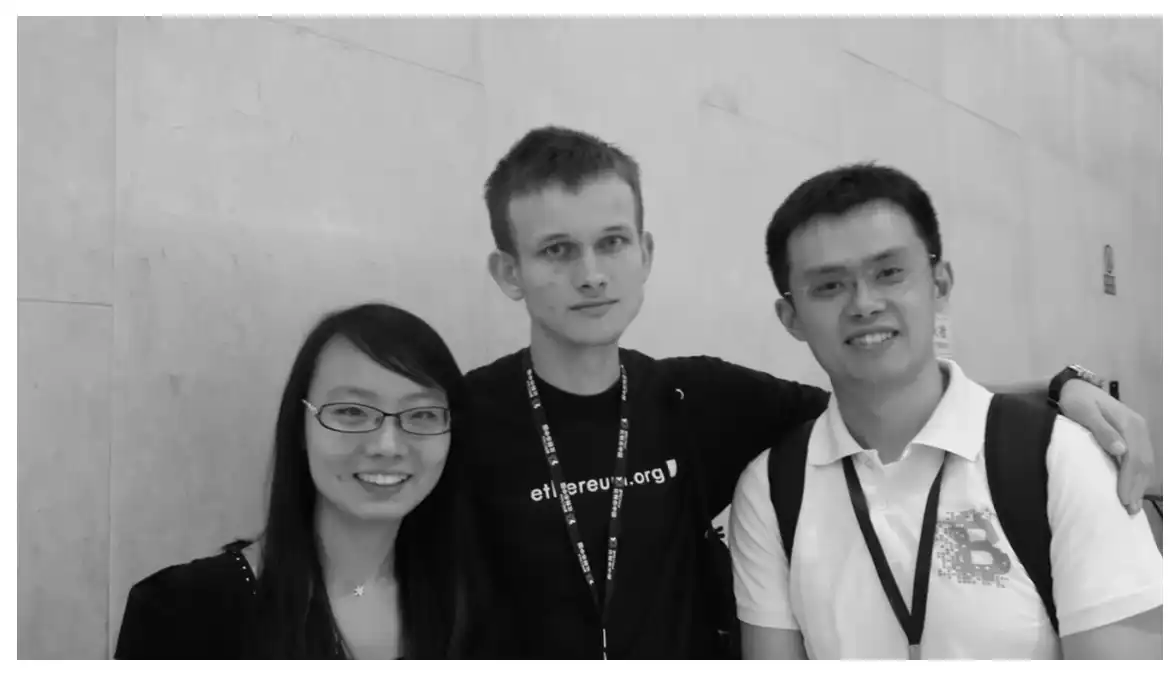
After that, they began a close relationship, with CZ even sending the Binance whitepaper to Vitalik for feedback. In 2015, when Vitalik visited Tokyo, he stayed at CZ's house, slept in a bunk bed with CZ's eight-year-old son, and even taught him programming.
In 2016, Vitalik visited Shanghai and toured the Bitmain office, where CZ introduced him to the team as a "genius." In July 2017, CZ asked Vitalik to review the Binance whitepaper. Although Vitalik was not a fan of centralized exchanges, he still provided suggestions.
During the COVID-19 pandemic in 2020, both were in Singapore, and CZ invited Vitalik to his home for dinner. After the FTX collapse in 2022, Vitalik suggested that Binance use zero-knowledge proof technology for reserve proof, which the team adopted. In 2025, Vitalik invited CZ to support an open-source epidemic prevention system he was researching, and CZ immediately made a donation.
Although Vitalik once publicly said on stage at a blockchain conference, "I hope all centralized exchanges burn in hell," CZ said he didn't mind, considering Vitalik's unique personality as a humble genius who sometimes speaks without thinking.
Justin Sun's "Kowtow"
In 2017, during the early days of Binance, Justin Sun was preparing to launch the TRON project and visited the Binance office, saying he came to "kowtow" to CZ. At that time, CZ heard this term for the first time.
On July 7, 2018, CZ flew to Zug, Switzerland, to attend a blockchain conference. That evening, the organizers hosted a welcome dinner at a lakeside restaurant for over 50 speakers. Justin Sun approached CZ for a photo, which was later misinterpreted by the media and trolls as a "private meeting" between the two of us. In reality, there were no fewer than 50 people around when the photo was taken.
Supporting Musk's Twitter Acquisition
In April 2022, Musk announced his plans to acquire Twitter. CZ's initial reaction was, "Great, at least the Twitter update speed might improve," and he even had a phone call with Musk. Later, the Binance team held a short meeting and decided to invest $500 million to support Musk's acquisition of Twitter, as reported by the media on May 5. Musk later backed out of the deal, causing a significant stock price drop. Six months later, Twitter turned around and sued Musk, forcing him to complete the transaction. By that time, CZ had lost interest in the deal.
On October 28, the Binance team confirmed that they had sent $500 million to Musk.
Later, CZ learned from the news that FTX also wanted to participate in the Twitter acquisition at the time, but Musk's "Anti-Deception Radar" went off, directly rejecting SBF.
Meeting with Sequoia in Court
On August 8, 2017, the day He Yi announced joining Binance, Sequoia Capital's Shen Nanpeng sent her a message hinting at willingness to invest. Binance then proceeded with negotiations, held a video meeting, and met at the Jing'an Shangri-La Hotel in Shanghai, but Sequoia's progress noticeably slowed down.
At the end of October, after Binance had weathered the risk, Sequoia once again expressed investment intentions, and CZ directly suggested the need to adjust the valuation. Due to disagreement on valuation, this investment ultimately did not go through.
On the day Binance reached its peak and Bitcoin hit an all-time high, Sequoia Capital came knocking, suing Binance for the uncompleted investment contract. CZ believed this was led by Sequoia's U.S. legal team and found the lawsuit very "particular." The book states: "For a startup, fighting a lawsuit with a VC is suicidal, especially an industry giant like Sequoia." In 2019, the court rejected all of Sequoia's claims, ruling in favor of Binance.
In 2023 in Abu Dhabi, CZ met with Sequoia China's Shen Nanpeng again (by this time, Sequoia's U.S. and China teams had split, with the China team renamed "Sequoia China"), and the two had a pleasant conversation, shaking hands and reconciling.
CZ's Family
In this book, CZ's description of his family is highly restrained, rarely sentimental, but the more restrained it is, the more weighty.
Even now, when I think of my father, I still feel sad
The father is the most complete and heaviest family role depicted in the book.
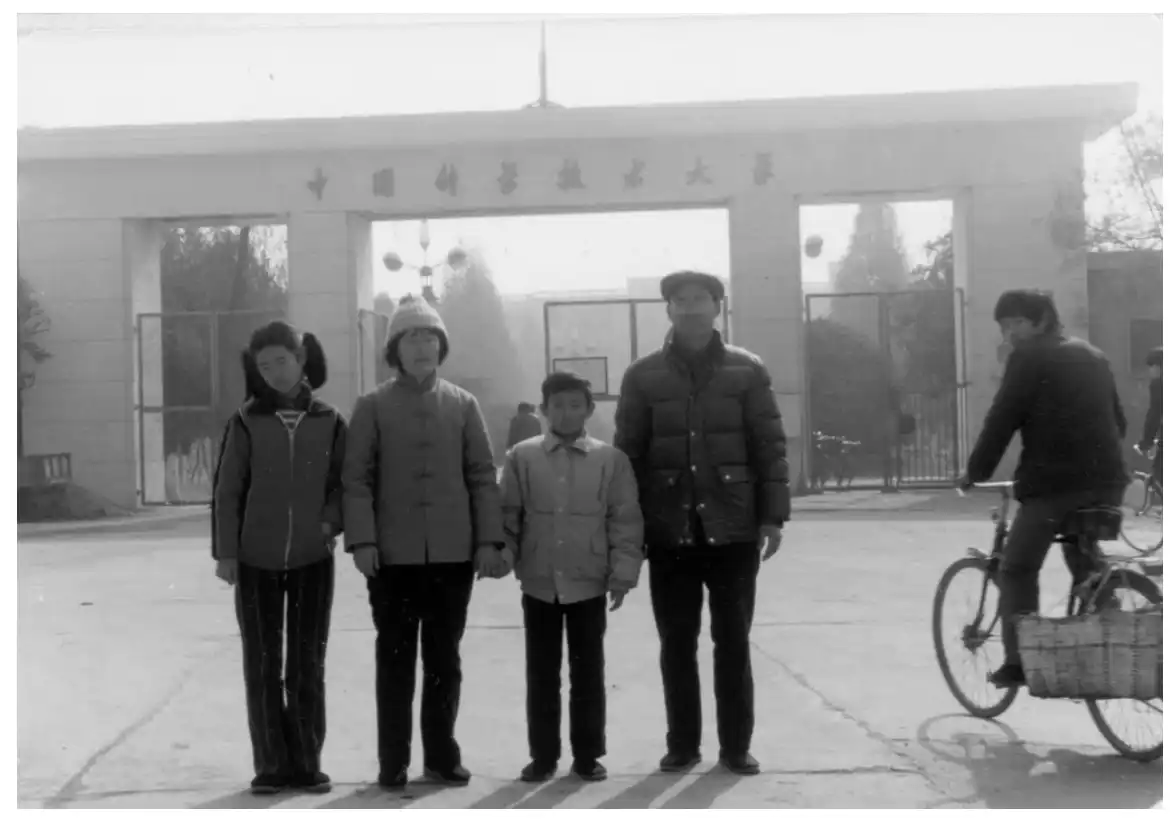
A family photo of CZ. Taken in 1987 at the University of Science and Technology of China in Hefei.
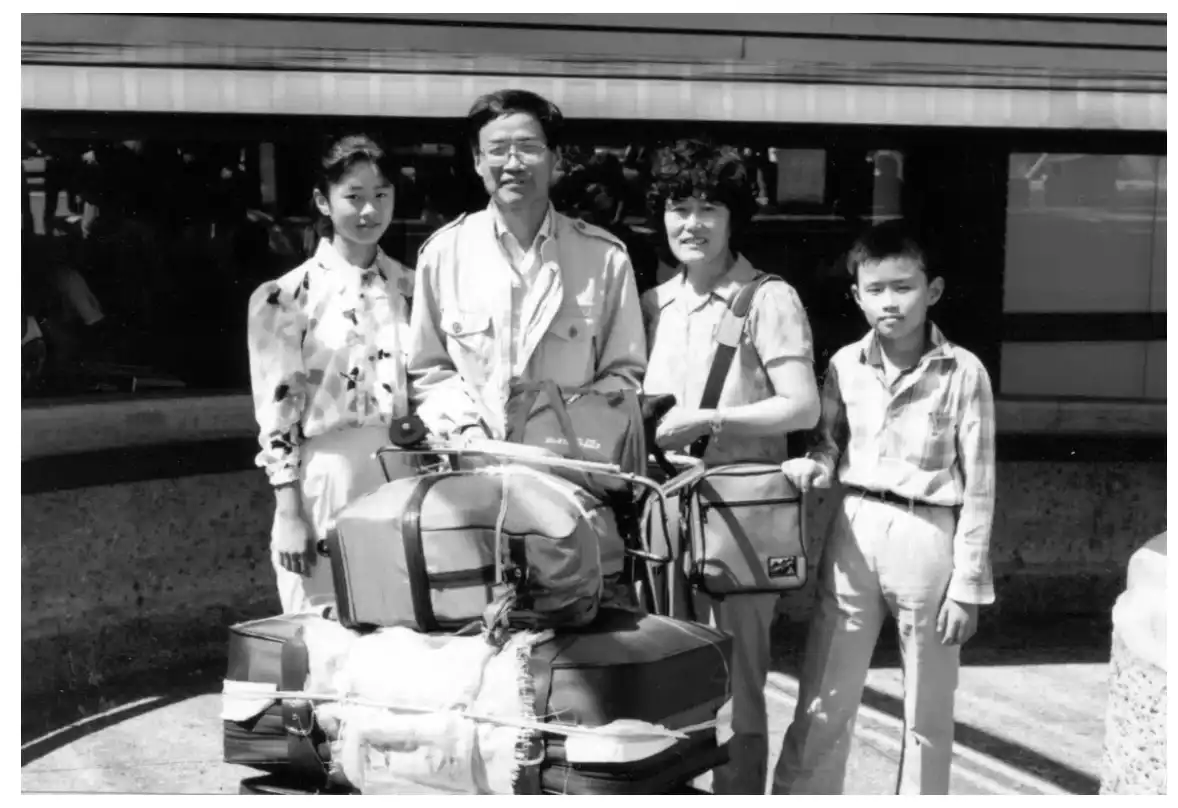
A family photo of CZ, taken on August 6, 1989, upon first arrival at Vancouver Airport.
During my childhood, my father was the one who was always away from home. My father was also the first person in the rural area of Jiangsu Province to attend college, where he self-studied calculus, linear algebra, and electromagnetic fields. He studied during late nights while others were playing cards and drinking, eventually gaining admission to the graduate physics program at the University of Science and Technology of China. He later became a university lecturer. As an exchange scholar, he went to the University of Toronto to pursue a Ph.D., was admitted to the UBC Physics Department, settled in Vancouver, and brought our entire family over. CZ said his father opened up new opportunities for him and his sister, but his father could only come home twice a year, during winter and summer breaks, with a one-way journey taking nearly 24 hours.
One notable detail: his father spent 7000 Canadian dollars (equivalent to seven months of his income) to buy 13-year-old CZ an x286 computer. CZ wrote: "This is the most expensive computer my father and I have ever bought in our lifetimes. But looking back now, this money was exceptionally well spent. Without that computer, I might not be where I am today."
While at UBC, his father was hit by a car while walking home late one night, leading to a three-day coma and long-term headaches. His dream was to start his own company, but due to English not being his native language and lacking business experience, he couldn't achieve it. He lived a simple and content life, only accepting money from CZ once, refusing any more when offered again.
His father's passing was one of the most emotionally intense parts of the book. In 2020, his father was diagnosed with leukemia, and by spring 2021, his condition worsened, with doctors estimating he had only 12 to 18 months left. CZ immediately suggested bringing his father to Singapore, contacted the top leukemia experts, and secured a humanitarian special entry permit during the COVID lockdown. Everything was arranged, but his father said he wanted to stay in Toronto for an extra two weeks.
A week later, his father had a fever on a normal night, choosing not to go to the emergency room late at night, deciding to go to the hospital the next day. Little did he know that the chemotherapy had significantly weakened his immune system. The next morning, he passed away.
"Just the previous night, they had taken a walk together, everything was fine."
CZ wrote: "This news was hard for me to accept. I had everything prepared, just one more week and I would have seen him. In the first two days, I cried several times. My father and I weren't particularly close, we didn't usually keep in touch often, perhaps that's a typical Chinese father-son relationship. But losing him left me feeling empty inside."
He also wrote: Even now, whenever he thinks of his father, he still feels sad, "I feel this way as I write this passage."
At 82, she traveled six hours by car to see her son
In the book, the mother was always portrayed as a quietly supportive figure, but she appeared at several of CZ's most crucial life moments.
During his childhood, with his father often away, his mother raised two children alone. Their home had a dirt floor, no running water, and she had to carry water every day from a well 300 meters away. She prepared a study desk for each child, which CZ described as "luxurious" for the rural area at that time, possibly planting the seed of learning in his subconscious. Later, his mother worked at a garment factory in Vancouver, leaving early in the morning, living frugally, and giving the best to her children.
When CZ sold his Pudong apartment for full-stack Bitcoin and the price subsequently crashed, his mother's only reaction was: "Why can't you have a stable job like your sister?" He used this sentence to describe that difficult period, simple yet profound.
On the eve of his plea, CZ wrote his resignation letter in a Seattle hotel room until four in the morning. That night, he had dinner with his sister, mother, and a few close friends. After dinner, he returned to his room to write.
When his mother visited the prison for the first time, she was stopped at the door because the immigration officer had not stamped her Canadian passport on entry, and the prison guard could not find the record. At 82 years old, she traveled six hours to see her son, only to be denied entry. His sister later downloaded and printed the entry records from the government website, and only then was she allowed in.
After being detained for 14 days, CZ was finally released. The moment he walked out of the detention center, "my sister and mother were already waiting outside." They got into a car and headed straight to the airport, where they boarded a private plane. CZ wrote: "I hugged my sister and mother and boarded the plane. From the moment I walked out of the detention center to when the plane took off, only 26 minutes had passed."
Upon landing in the UAE, he wrote: "The moment I hugged my kids and family again, I felt true happiness."
Having such a sister is truly my fortune
The sister appears throughout the book almost as frequently as He Yi, another family member, and during CZ's most vulnerable moments, she was present almost every time.
Childhood: Two years older than CZ, his sister started school early compared to peers. In Vancouver, at the age of 15, she started working at McDonald's, and a year later, she took CZ to work there too. When they lived in UBC campus housing, CZ slept in a small windowless storage room, and every few weeks, his sister would suggest swapping rooms with him to let him "breathe," to which CZ said, "Having such a sister is truly my fortune."
The prison visitation phase is where the sister's role in the book is most prominent. CZ was in a low-security prison, and family visits needed to be on a pre-approved list before sentencing. Holding the printed regulations from Michael Santos, his sister struggled at the prison gate before finally getting in and helping his mother with the passport entry stamp issue. CZ wrote: "Before the first visit from my family, I kept saying they didn't need to come see me. But to be honest, after a week in prison, seeing them again made me really happy. Knowing the day they were coming, I prepared hours in advance and waited. When the guard finally called my name, I almost floated down the corridor to the visitation room. That was one of the happiest moments of my entire time in custody."
During the final nine days of house arrest, CZ stayed at his sister's house. His sister set up a landline specifically for this purpose, disabled call forwarding, attended supervisor training, and passed the staff's home visits.
This Charming Girl is Winnie
Winnie only appeared once in the book, and it was very brief:
“Shortly after arriving in Tokyo, I once walked into a cozy Chinese restaurant with a friend by chance. The delicate Chinese waitress in the restaurant caught my eye, and we naturally started chatting. It turned out that this was her family's restaurant, her father was the only chef in the restaurant, responsible for the 485 dishes on the menu; her mother took care of the dining area and handled the payments. This charming girl is Winnie. We started dating and got married a few years later.”
Just this one instance. There was no further explanation in the book about the marriage process.
CZ's Most Mentioned Friends in the Book
Cao Dawei and Li Qi yuan
These two individuals are the starting point of the entire Binance story:
In July 2013, at a poker game with an old friend, Cao Dawei (General Manager of Lightspeed China, whom CZ had known for six years) casually mentioned, “CZ, there's this new thing called Bitcoin, you should take a look.” The next day, CZ had dinner with Li Qi yuan (Li Qiwei, the brother of Litecoin's founder), and Li Qi yuan gave the famous advice: “You should convert 10% of your assets into Bitcoin. There is a small chance it will go to zero, and you would lose 10%; but there is a high probability it will increase tenfold, doubling your net worth.”
Afterward, these two individuals invited CZ multiple times to join BTC China as the CTO, which happened a total of three times. Each time, CZ politely declined due to other opportunities. In the final invitation, BTC China even offered 10% ownership, but another opportunity took him away.
After that dinner, CZ quit all poker groups
Eric's part is short but significant.
In 2015, CZ returned to Shanghai, immersing himself again in playing poker, golfing, and various social activities. One day, his friend Eric suddenly said during dinner, “CZ, if you quit poker for two years, you can play however you want afterward. With your intelligence and emotional intelligence, you could have achieved greater things. The current you is simply wasting life.”
Eric, ten years older than CZ, had sold his early entrepreneurial venture to Motorola and was always gentle and polite, never speaking harshly. CZ wrote that after that meal, Eric's words took root in his mind and lingered for days. From that day on, he quit poker, his work efficiency soared like a rocket, and he eventually founded Binance. The book concludes, “To this day, I am still thankful for his sincere advice and warning.”
This is the most direct expression of gratitude for friendship by CZ throughout the entire book.
A Twenty-Year Friendship, an Old Friend Who Always Steps Up in Critical Moments
CZ and Heina have known each other for twenty years. In 2005, she was selling wine in a friend's wine cellar in Shanghai, a woman from rural Sichuan who worked and studied part-time to obtain a bachelor's degree. After joining Binance, she was in charge of all backend affairs, which is the reason behind CZ's statement, "I put 99% of my energy in the frontend, and I dodge backend issues whenever I can."
In the early days of Binance, withdrawals were all manually processed. Heina, as the finance manager, was assigned to do manual reviews at the final stage to prevent errors in the system that could lead to abnormal asset outflows. Her work rhythm was as follows: busy from early morning until late at night, reviewing a batch of withdrawal requests every 15 to 30 minutes until 1 a.m., then resting for three hours, waking up at 4 a.m. to review the next batch, and continuing this cycle at 7 a.m. for a new day. She continued like this without interruption.
Due to Heina's long nights at work, her husband's accumulated anger finally erupted. In a fit of rage, one night he took the computer, smashed it on the ground, and then stomped on it fiercely. In the book, CZ left a message for that husband: "He may only know when he sees this book that the night he smashed in anger, it was Binance's hot wallet."
Most wallets were recovered through backups, but it was discovered that a hot wallet containing about $500,000 worth of a newly added cryptocurrency had not been backed up in time. CZ said, "While this amount of money did not bankrupt us, it was not a small sum either."
Afterward, Binance comprehensively upgraded its backup mechanism and eliminated the manual withdrawal review process. Heina also received a military-grade, drop-resistant laptop as compensation and prevention.
In the early morning when the September 2017 ban arrived, Heina was in the most difficult situation: she did not have a Japanese visa. At 2 a.m., she woke her husband up and told him, "I have to fly to Thailand at 6 a.m. I don't know when I'll be back." Their two-year-old son was still asleep. Her husband asked, "How long will you be gone?" She replied, "Not sure." CZ jokingly wrote, "I was surprised that no second laptop was smashed that night."
An Old Friend, Rich, Who Always Appears at Critical Junctures
Rich is one of the most consistently mentioned real-world friends in the book.
While the book does not extensively describe how the two met, Rich appears at multiple critical junctures: in 2021, it was Rich who first alerted CZ to pay attention to Michelle Bond, the person lobbying for FTX in Washington to suppress Binance; during the Justice Department case, Rich was also in the circle of friends supporting CZ; on the night of the guilty plea, he was one of the good friends who was present. Rich is the type of person CZ describes as "always by my side," not a industry star, but someone who shows up at every critical moment.
High School Era Best Friend Ted
Ted, CZ's longest-standing friend across time, was CZ's best friend at University Hill Secondary School in Vancouver. Ted's father was a doctor in Taiwan, and his family was much better off than CZ's. Ted's mother prepared two packed lunches every day, one for Ted and one for CZ, who always forgot his lunch. CZ said that his humble character may have been learned from this mother.
Twenty years later, the two still kept in touch. On the night of the 2018 Taiwan earthquake, CZ and Ted were eating street food when Ted received a message informing him that he was featured on the cover of the February issue of Forbes. That same year, a letter from the Japanese Financial Services Agency was also received by Ted first, as CZ never checked his emails. This detail is interesting—how a high school buddy was still looking out for important emails for him.
Crypto OG Senior Bao Er
Senior Bao Er was an early OG in the crypto world at Binance, a senior figure in the industry with a close relationship with CZ. When he visited the office during Binance's early days, he suggested on the spot that CZ bring He Yi on board, saying, "If she can join, all problems will be solved." This became one of the direct catalysts for He Yi's joining.
On the other hand, when FCoin launched the "trading mining" model, sparking a trend in the industry, Senior Bao Er also advised CZ to follow suit. After CZ publicly criticized this model on Weibo, Senior Bao Er openly said, "Your logic is flawed." CZ still insisted on his own judgment, and the subsequent bankruptcy of FCoin proved him right. Despite their differing opinions, the book portrays Senior Bao Er as always emotionally invested in their relationship, not in an adversarial manner.
First Friend in Prison Jay
Jay was an Asian cellmate of CZ. Within five minutes of CZ entering Block C, Jay voluntarily helped him apply to change out of a leaky cell, brought him bedding and a sweaty old sweater that night, and taught him the basic etiquette in prison. Before CZ could say anything, Jay declared, "You're one of us." That's how CZ involuntarily joined the "Pacific Islanders" gang, a small group of only 6 out of 200 inmates in the entire block.
Jay is a compact yet vivid character in the book, representing the genuine kindness CZ unexpectedly received in prison.
You may also like

a16z: After securities are on the blockchain, why will intermediary institutions be replaced by code?

XRP Tokyo Is Here: What We Learn and What’s Next for XRP Price
Key Takeaways: Ripple’s 2025 XRP Tokyo event highlights a projected $33 trillion on-chain stablecoin volume by 2026. Significant…

Solana’s Future: Navigating the $285M Hack, Rug Pulls, and Milei Libra Scandal
Key Takeaways: Multiple Crises: Solana faces a $285 million hack, allegations of rug pulls, and the Milei Libra…

BTC USD Faces Tension: Markets React to Trump’s Dire Warning
Key Takeaways: Bitcoin’s price drops sharply below $70,000 amid geopolitical tensions, playing off Trump’s dramatic 8 PM ultimatum…
Bitcoin Price Surge: Ceasefire Sparks Optimism Hits $71K
Key Takeaways: After the US-Iran ceasefire announcement, Bitcoin surged beyond $71,000, marking its highest in a month. A…

Ethereum Price Forecast: Record $180 Billion Stablecoin Supply Marks Buyers’ Return
Key Takeaways: Ethereum’s stablecoin supply has surged to a record $180 billion, marking a 150% increase over the…

Emerging Evidence Links Argentina’s Milei to LIBRA Crypto Scandal
Key Takeaways: Evidence unveiled by Argentina’s federal prosecutors links President Javier Milei to the LIBRA token through call…

US Spot Bitcoin ETFs See Surge as BTC Nears $70K; LiquidChain and Layer-3 DeFi Rise
Key Takeaways: U.S. spot Bitcoin ETFs absorbed $471 million in a single day, moving BTC closer to the…

Bitcoin Price Prediction: Decoupling from Tech Stocks, Shaped by Geopolitics and AI Turmoil
Key Takeaways: Bitcoin is decoupling from tech stocks as geopolitical tensions and AI crises reshape the market, currently…

Chaos Labs Departure Leaves Aave Without Risk Management Amidst Governance Conflict
Key Takeaways: Aave, with a $50 billion TVL, is currently operating without a risk manager due to Chaos…

Grayscale Ethereum ETF Staking: A New Catalyst for $5,700?
Key Takeaways: Grayscale’s Ethereum Staking ETF introduces a yield-bearing structure that could significantly reshape investor sentiment. Ethereum’s price…

Polygon Crypto Enhances Finality Through the Giugliano Hardfork
Key Takeaways: Polygon’s Giugliano hardfork is operational on the mainnet, effectively reducing transaction finality by 2 seconds. The…

Senate’s Three-Week Deadline: Ripple XRP and the CLARITY Act’s Critical Moment
Key Takeaways: The Senate Banking Committee’s decision on the CLARITY Act in late April could define XRP’s future…
Solana Foundation Introduces STRIDE for DeFi Security
Key Takeaways: STRIDE is a structured security evaluation program for Solana’s DeFi ecosystem, managed by Asymmetric Research. It…
Trump Iran Doomsday Deadline Revisited: How Will Bitcoin and SPX Respond?
Key Takeaways: The geopolitical tension surrounding the Trump Iran deadline poses significant risks to Bitcoin prices and the…

XRP Crypto Slips to $1.31: Liquidity Challenges and Market Movement
Key Takeaways: XRP has fallen to $1.31, struggling after a rejection at the $1.35 level, showing potential liquidity…
Bitcoin Decoupling from Fed and ETFs in 2026
Key Takeaways: Bitcoin’s correlation with the Global Easing Breadth Index has reversed, showing a significant -0.778 correlation by…
BTC USD Price Trends: Saylor Strategy Seizes Moment in Market Rally
Key Takeaways: Strategy’s recent buy of 4,871 BTC reveals a robust conviction despite roughly $5 billion in unrealized…
a16z: After securities are on the blockchain, why will intermediary institutions be replaced by code?
XRP Tokyo Is Here: What We Learn and What’s Next for XRP Price
Key Takeaways: Ripple’s 2025 XRP Tokyo event highlights a projected $33 trillion on-chain stablecoin volume by 2026. Significant…
Solana’s Future: Navigating the $285M Hack, Rug Pulls, and Milei Libra Scandal
Key Takeaways: Multiple Crises: Solana faces a $285 million hack, allegations of rug pulls, and the Milei Libra…
BTC USD Faces Tension: Markets React to Trump’s Dire Warning
Key Takeaways: Bitcoin’s price drops sharply below $70,000 amid geopolitical tensions, playing off Trump’s dramatic 8 PM ultimatum…
Bitcoin Price Surge: Ceasefire Sparks Optimism Hits $71K
Key Takeaways: After the US-Iran ceasefire announcement, Bitcoin surged beyond $71,000, marking its highest in a month. A…
Ethereum Price Forecast: Record $180 Billion Stablecoin Supply Marks Buyers’ Return
Key Takeaways: Ethereum’s stablecoin supply has surged to a record $180 billion, marking a 150% increase over the…


 App
App