
The US SEC's move towards Coinbase illustrates the regulatory gap in the cryptocurrency space.

Original Article Title: SEC's Coinbase Move Signals Regulatory Vacuum for Crypto
Original Article Author: Yueqi Yang, The Information
Original Article Translation: Block unicorn
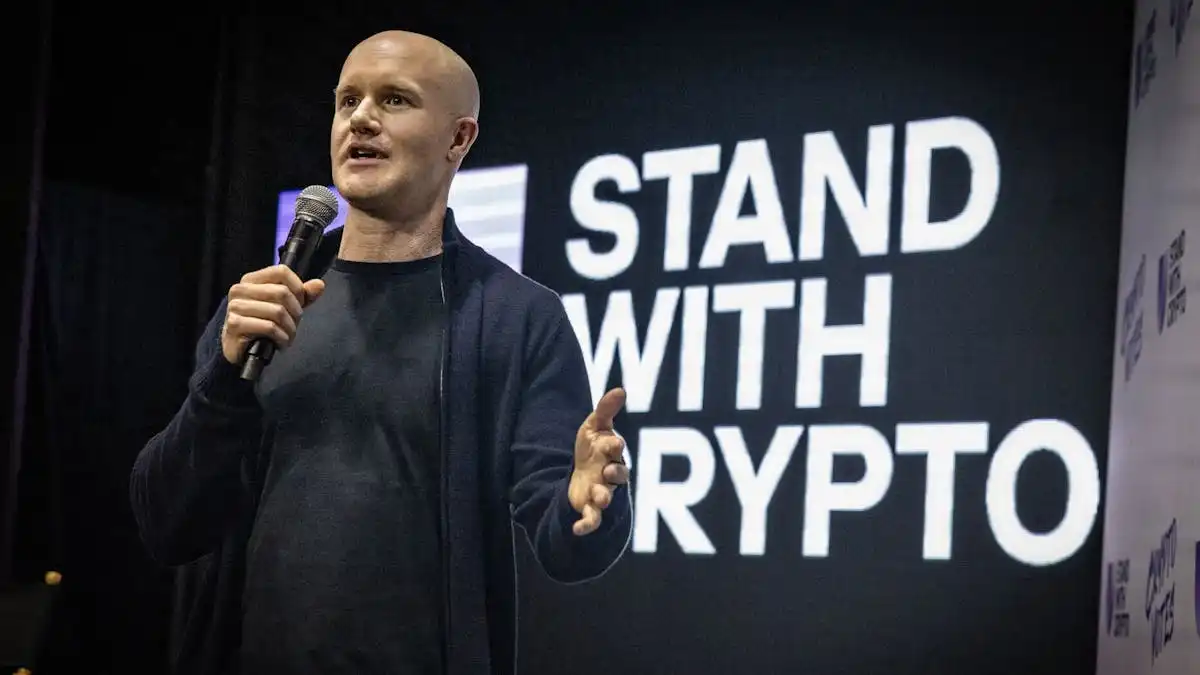
Welcome to the official beginning of the cryptocurrency regulatory vacuum. This is where we find ourselves now as Coinbase, the United States' largest cryptocurrency exchange, has indicated it has reached an agreement with the Securities and Exchange Commission (SEC) staff to dismiss the lawsuit alleging the company operated an unregistered securities exchange (at least that's what Coinbase is saying—we'll have to wait for confirmation from the SEC after a commission vote).
Last Friday morning US time, Coinbase's stock rose 2.2%. This news marked a significant development for the cryptocurrency industry in terms of regulatory progress, especially as the SEC's decision to drop its long-running lawsuit against Coinbase seemed to usher in a regulatory vacuum for the cryptocurrency industry. Coinbase CEO Brian Armstrong stated in a post on X that the dismissal means Coinbase will not pay any fines, will not have to make any changes to its operations, and added that the company has spent around $50 million litigating the case.
It appears that a top financial regulatory agency is pausing the enforcement of decade-old securities rules related to cryptocurrency as it awaits new rules to be set by Congress—if Congress can pass any rules at all. And these congressional deliberations are likely to take some time. Essentially, cryptocurrency companies have been promised regulatory exemptions while Trump's cryptocurrency task force tries to figure out the industry's next steps.
While all of this may sound optimistic for the cryptocurrency industry, things are not all sunshine and rainbows. Today we have seen some reminders of the risks facing the cryptocurrency space: just two hours after Coinbase shared its good news, Bybit, the world's third-largest cryptocurrency exchange, confirmed it had been hit by a hack of over $1 billion, making it the largest hack in cryptocurrency history.
During such hacks, panicked investors may mass withdraw their funds, and if an exchange doesn't have enough funds to cover withdrawal requests, it could deal a fatal blow to the exchange. Currently, Bybit CEO Ben Zhou has stated that the exchange holds enough funds to cover the hacked amount and is still processing withdrawals normally. Nevertheless, both Bitcoin and Ethereum prices have subsequently dropped, and while Coinbase's stock initially rose after news of the SEC's action in the morning, it fell by 8% in afternoon trading.
This situation may take days or even weeks to clarify before any chain reaction becomes apparent. This hack not only exposed the inherent risks of cryptocurrency but also demonstrated that traditional financial institutions' current security measures can protect them from cryptocurrency risks. For those still under the strict scrutiny of the SEC and federal banking regulators, such as banks and traditional stock exchanges, this is somewhat reassuring.
These companies have long argued that the cryptocurrency industry currently has an unfair advantage in terms of regulation. For example, Nasdaq complained earlier this month during a meeting with a task force, requesting the SEC to set a clear deadline for the "hands-off" status of cryptocurrency exchanges. The exchange giant had previously expressed its desire to launch cryptocurrency operations. Banks also hope to offer cryptocurrency services to institutional traders and investors, possibly to prevent losing clients interested in cryptocurrency to cryptocurrency exchanges and trading firms. However, they still need approval from banking regulators to do so.
This week, a heavyweight alliance composed of banking lobby groups requested the Trump administration to find a way to ensure they do not miss out on this game. This series of events not only highlights the vulnerability of the cryptocurrency industry but also reflects the advantage of traditional financial institutions in terms of regulation and protection measures. As the cryptocurrency market continues to evolve and the regulatory environment gradually takes shape, how to balance innovation and risk in the future remains a question worth pondering.
You may also like

Duan Yongping establishes a position in a cryptocurrency company for the first time: Why Circle?

Vitalik: What is the key to the next phase of Ethereum?

Interlace: A global leader in Agentic Payment and stablecoin infrastructure platform, building the next generation of digital financial foundation

Morning Report | Musk's xAI launches Skills; Duan Yongping to first build position in Circle in Q1 2026; Polymarket partners with Nasdaq to launch prediction market
Dialogue with Lead Bank Founder Jackie: American Banks Re-embrace Crypto

Vitalik: What we need to do is not to fight against AI, but to create a sanctuary

Morning News | VanEck and Grayscale submitted BNB ETF amendments on the same day; BlackRock discusses investing billions of dollars in SpaceX's IPO; Michael Saylor releases Bitcoin Tracker information again

Crypto ETF Weekly | Last week, the net outflow of Bitcoin spot ETFs in the United States was $995 million; the net outflow of Ethereum spot ETFs in the United States was $255 million

This Week's News Preview | The Federal Reserve Releases the Last FOMC Minutes of the "Powell Era"

Blockchain Capital Partner: Most people's understanding of on-chain economy is narrow

The ambition of "one account trading global assets": How does CoinUp.io break down asset barriers to become an industry dark horse?

How long will it take for the GPU futures market when computing power is commoditized?

Harvard University loses $150 million in cryptocurrency! Has completely liquidated Ethereum and significantly reduced its Bitcoin ETF positions
BNB Chain releases a research report exploring the migration path of BSC to post-quantum cryptography

After the number of developers was halved: Crypto is not dead, it has just handed over talent to AI
"JUST 6th Anniversary x GasFree Super Carnival Month" is here: Enjoy "0" Gas transfer freedom and share a prize pool of 10,000 USDT

Morning News | AEON completes $8 million Pre-Seed round financing led by YZi Labs; Goldman Sachs liquidates XRP and Solana ETF holdings in Q1; Strategy increased its holdings by 24,869 BTC last week

Capital Markets: How will independent agents obtain financing?
Duan Yongping establishes a position in a cryptocurrency company for the first time: Why Circle?
Vitalik: What is the key to the next phase of Ethereum?
Interlace: A global leader in Agentic Payment and stablecoin infrastructure platform, building the next generation of digital financial foundation
Morning Report | Musk's xAI launches Skills; Duan Yongping to first build position in Circle in Q1 2026; Polymarket partners with Nasdaq to launch prediction market
Dialogue with Lead Bank Founder Jackie: American Banks Re-embrace Crypto
Vitalik: What we need to do is not to fight against AI, but to create a sanctuary