Crypto Speculation Bubble Has Burst? Examining the Crypto Investment Space from First Principles

Original Article Title: First Principles - Compounders, L1s, IR, Buybacks
Original Article Author: 0xkyle__, DeFiance Capital Member
Original Article Translation: ChatGPT
Editor's Note: The author believes that the biggest problem in the crypto field is not talent or capital, but rather a lack of first principles thinking, leading to the industry being trapped in a cycle of short-termism, extractive culture, and low trust. The author analyzes the reasons why compounders are hard to come by, proposes the need to drive long-term thinking from the top and focus on building revenue-generating products, criticizes the inefficiency of general-purpose Layer 1 blockchains, suggests their focus on specific domains and building their own ecosystem to give tokens value, further emphasizes that liquidity token projects should establish an investor relations role to enhance transparency, rather than relying solely on buybacks and burns, advocates for using funds to expand products and solidify long-term competitive advantages to break the current nihilistic deadlock and achieve sustainable growth.
Below is the original content (rearranged for better readability and understanding):
The biggest issue in this field is neither talent nor capital. Simply put, it is a lack of first principles thinking. This is a culture that must change. That 1% of people need to start pushing this field forward.
If you've been following my Twitter lately, you'll notice I've been shilling some very low-hanging fruit that seems to have a high leverage effect, appears very easy to accomplish, but no one seems to "get" or execute well on. Here are some points I've made:
· The real issue is: Why aren't more chains using their grant programs to incubate their own dapps and build dapps clearly consistent with the chain instead of hoping these dapps don't ditch the chain within two years?
· The reason this industry has the price action it does now is largely that everyone has this mentality: "You have to sell because one day it's going to zero." And that's because no one has really built a good product that people want to continuously DCA into. Crypto needs compounders.
· The "marketing" in the crypto space is often not aligned with the product in most cases. If you're not a consumer-facing product—like you're a yield platform, why are you even marketing to retail users. The best marketing is often price appreciation. And the best at doing that are liquidity pools.
In this article, I will discuss each of the following topics:
· Compounders, Culture, Short-termism
· Layer 1 Maximalism is Dead, Long Live the Change
· Liquidity Tokens and Investor Relations
· Buyback and Burn is Least Worst, Not Best
I titled this post "First Principles" because all of these points came to me during a simple thought exercise on how to change the industry today using common sense.
This isn't profound. Insanity is doing the same thing over and over again but expecting different results.
We've been through three cycles of doing the same thing over and over again—essentially creating hollow, zero-sum value accrual, maximal extractive tokens and apps, because for some stupid reason, we decided every four years to open a casino so rabidly, drawing capital from around the world to gamble.
Guess what? Three cycles later, ten years on, people are finally realizing the house, the scammers, the manipulators, the people rigging the machines, the ones selling you overpriced food and drinks in the casino, have taken all your money. The only thing you can show after months of hard work is how you managed to lose all your history on-chain. An industry predicated on "I'll come in, make my money, then leave" does not lead to the building of any long-term compounding.

This place used to be better, used to be a place for legitimate financial innovation and cool tech. We used to be excited about novel, interesting apps, new tech, "changing the future of finance."
But due to extreme short-termism, a maximal extractive culture, and low-integrity people, we've spiraled into this eternal financial nihilism self-devouring loop, where everyone thinks constantly aping into random scam tokens is a good idea, this loop collectively self-fulfills because "I'll sell before he scams me." (Seriously, I've seen someone say they know the "SBF token" is a scam but will sell before getting rugged for a "quick profit.")
You can say I don't have building experience—fair point. But it's a small field and a short time in existence; working in this space for four years, collaborating with some of the best and brightest funds, has given me a deep understanding of what works and what doesn't.
Reiterating: Insanity is doing the same thing over and over again but expecting different results. As a field, year after year, we've gone through the same motions—feeling this nihilism post-inevitable price collapse, believing it's all worthless. I felt it during the NFT crash (god, this was all a scam), people are feeling it now post-recent meme coin failures, and people felt it during the ICO era.
Changing the status quo is simple: we just need to start doing things differently.
Compounding, Culture, Short-Termism
Compounding is simply an asset that only goes up over many years—think Amazon, Coca-Cola, Google, and the like. Compounding is about companies with the potential for sustainable, long-term growth.
Why haven't we seen compounders in the crypto space?
The answer is more nuanced than this, but fundamentally—extreme short-termism and misalignment of incentives. Indeed, the incentive structures have many issues, well-covered in Cobie's private capture, phantom pricing article. I won't dive into that, as the focus of this piece is, what can we as individuals actually do?
For investors, the answer is clear—Cobie points it out here: you can opt out (you probably should).
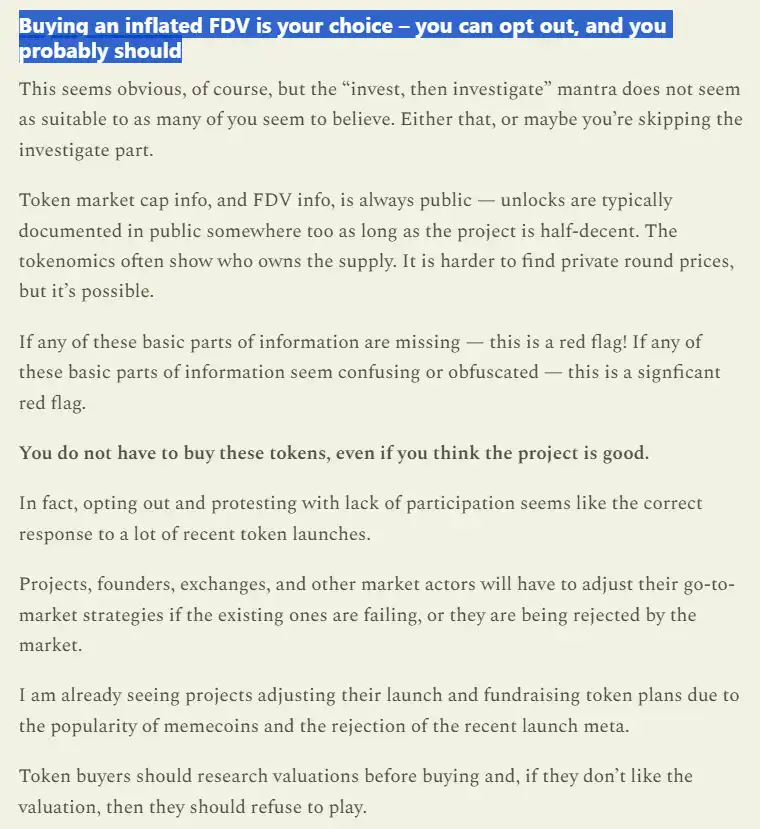
Indeed, people have been opting out: this cycle, we've seen the decline of "CEX tokens" as retail participants opt not to buy these tokens; while individuals may not have the power to change this systemic issue at a protocol level, the good news is that financial markets are quite efficient—people want to make money, and when the existing mechanisms don't allow for that, they don't invest, rendering the whole process unprofitable, thus forcing a change in mechanisms.
However, this is just the first step of the process—to truly build compounders, companies need to start instilling long-term thinking in this space. It's not just that "private capture" is bad, it's the entire thought chain that got us here—like a self-fulfilling prophecy, founders seem collectively to believe "I'll make my money and exit," with nobody really interested in playing the long game—that means the chart always looks like a McDonald's golden arch.
The top must change: a company is only as good as its leadership. Most projects fail not due to lack of developers but due to high-level decisions to exit. This industry must start to see those founders with high integrity, high energy, and long-term thinking as the role models, not the idealized "pump and dump" founders.
The average quality of founders in this space is not high, that's no news. After all, this is a field where those tethered to pumpfun tokens are called "developers"—the bar isn't really that high. As long as you have a vision that goes beyond the first two months of token launch, you're ahead of the pack.
I also believe that the market will start to economically incentivize this long-termism; we're beginning to see it already. Despite recent sell-offs, Hyperliquid is still up 4x from its launch, which is not something many projects can boast about in this cycle. When you know the founder is aligned with the long-term growth of the product, the argument for "HODLing" is usually easier to make.
The natural conclusion is that founders with high integrity and high stickiness will begin to occupy a large portion of the market share because, frankly, when everyone is tired of scams, they just want to work for someone with a vision who won't exit scam—and there are very few of those.
Aside from having a good leader, the establishment of compounding also depends on the assumption of whether the product is good. In my view, this issue is easier to solve than finding a good founder. The reason the crypto space has so many pointless products is that the people creating these pointless products also have a "make money and leave" mentality—they choose not to tackle new problems and instead just fork popular things and try to make money from them.
However, the reality is that this industry does indeed reward this frivolous idea—such as the AI agent frenzy in Q4 2024. In this scenario, after the dust settles, we will see the usual McDonald's M-shaped pattern—hence, companies must also start focusing on building profitable products.
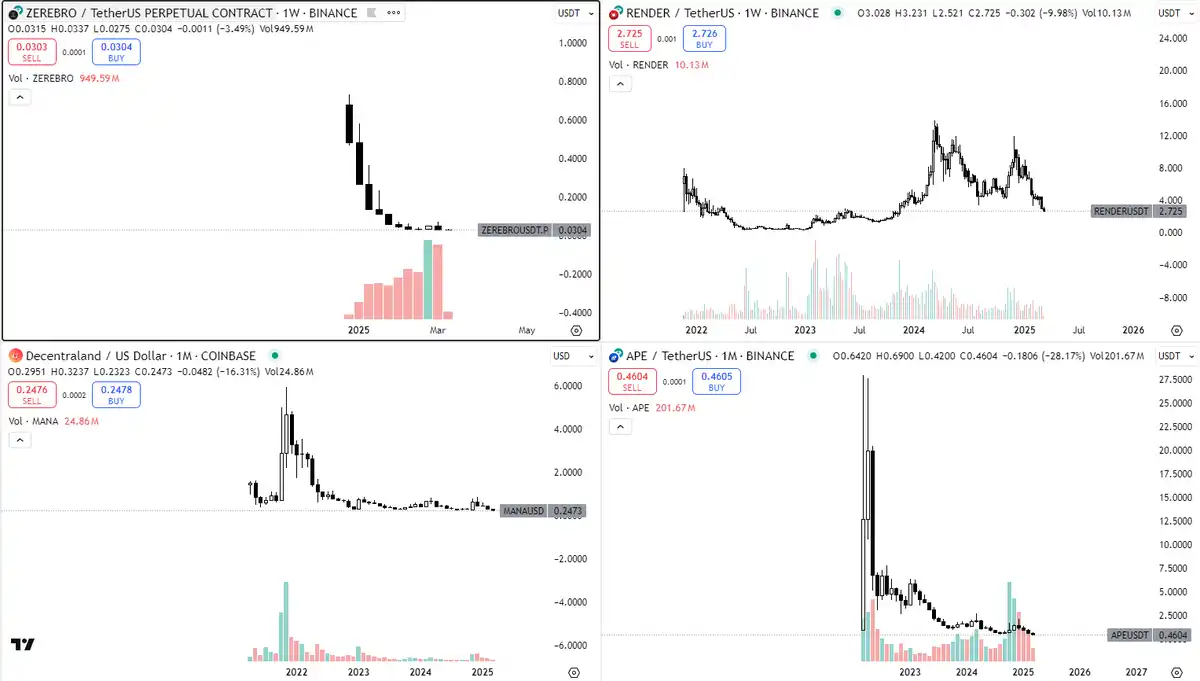
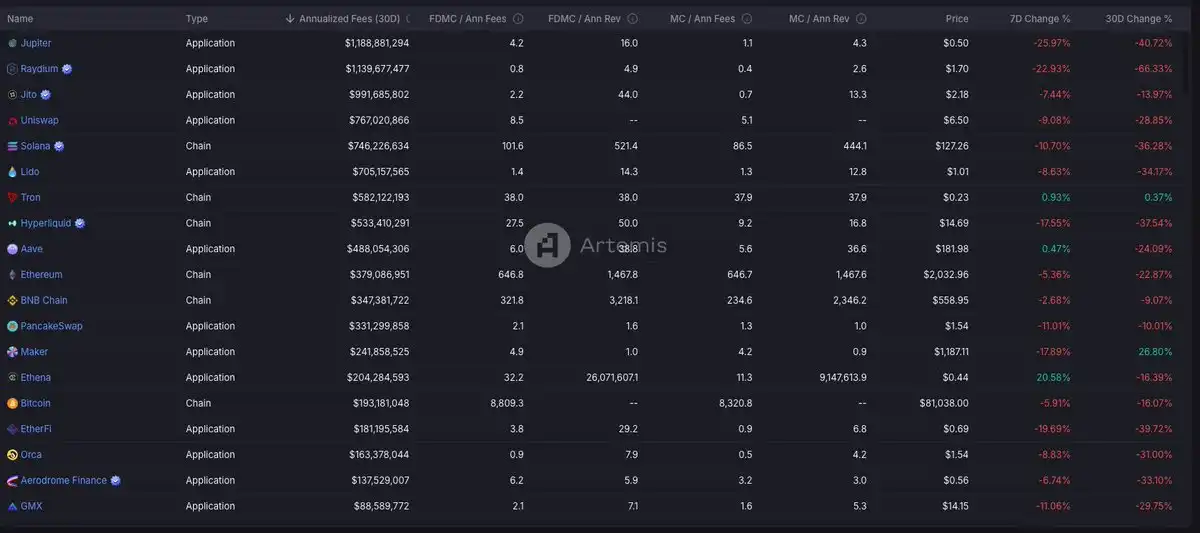
No revenue path = no long-term believers/holders = no buyers with no assets because there is no future to bet on.
This is not an impossible task—crypto businesses do make money. Jito has a yearly revenue of 9 billion, Uniswap 7 billion, Hyperliquid 5 billion, Aave 4.88 billion—they continue to make money even in the bear market (just not as much).
Looking ahead, I believe the fleeting, narrative-driven speculative bubble will become smaller and smaller. We have already seen this—2021's gaming and NFT pricing amounted to trillions, but this cycle, the peak of memes and AI agents is only in the billions. It's a macro-level euthanasia rollercoaster.
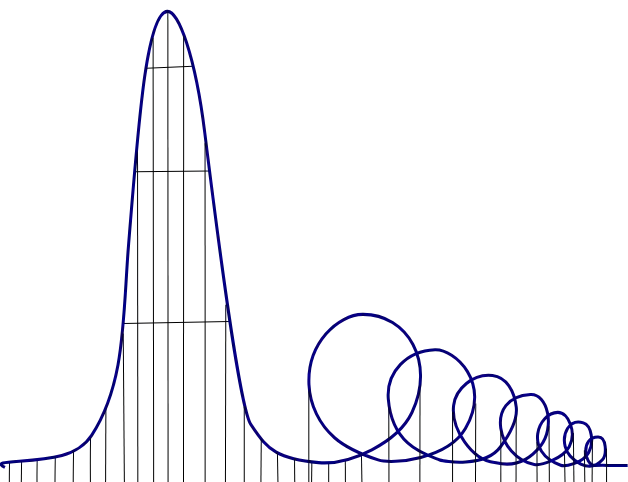
I believe everyone should be free to invest in what they want. But I also believe people want their investments to yield returns—when a game is so clearly seen as "this is a hot potato, I must sell before it goes to zero," the rollercoaster will speed up, the market will shrink as people choose to exit or lose all their money.
Revenue solves this issue—it lets you as an investor understand that people are willing to pay for the product, thus having a certain long-term growth outlook. When something lacks a revenue path, it is almost uninvestable on a long-term basis. On the other hand, a revenue path leads to a growth path, attracting buyers who are willing to bet on continuous asset growth.
In conclusion, building a compounding system requires:
· Top-down instilling of long-term thinking
· Focus on building revenue-generating products
The Death of General-Purpose L1, A Necessity for Change
If you were to sort Coingecko's homepage by market cap, you would find that blockchain occupies more than half of it; apart from stablecoins, Layer 1 holds significant value in our industry.
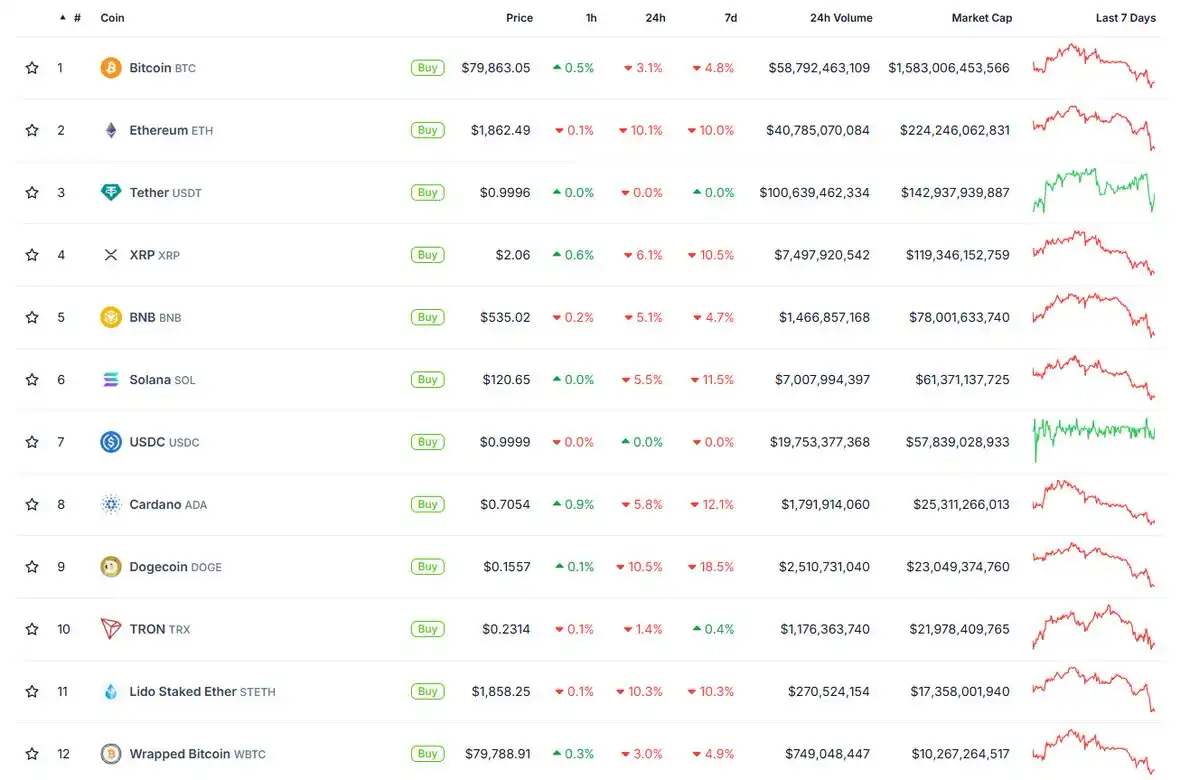
However, the chart of the second-largest digital asset after Bitcoin looks like this:
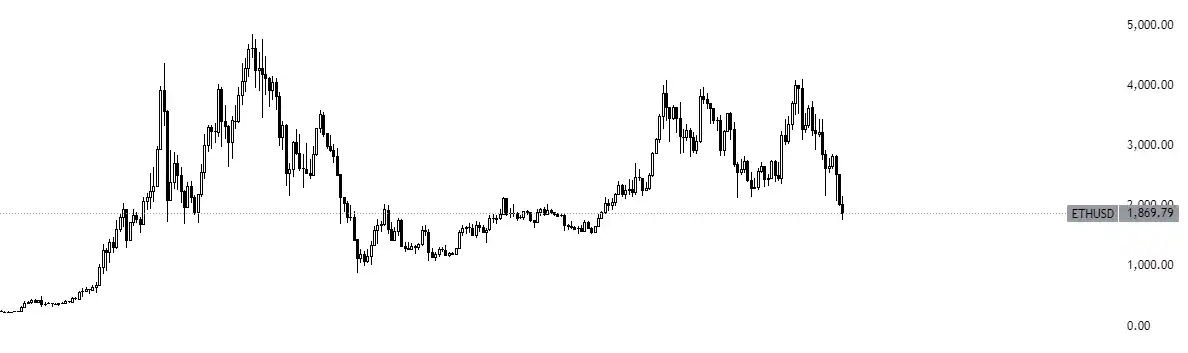
If you bought Bitcoin in July 2023, based on the current price, you would be up 163%.
If you bought Ethereum in July 2023, based on the current price, you would be up 0%.
And that's not even the worst part. The bubble of 2021 triggered a wave of "Ethereum killers"—new blockchains aimed at surpassing Ethereum in some technological way, whether in speed, development language, block space, etc. But despite the hype and significant fund inflows, the results did not meet expectations.
Today, four years from 2021, we are still facing the consequences of that wave—a total of 752 smart contract platforms have launched tokens on Coingecko, and there may be more yet to launch.
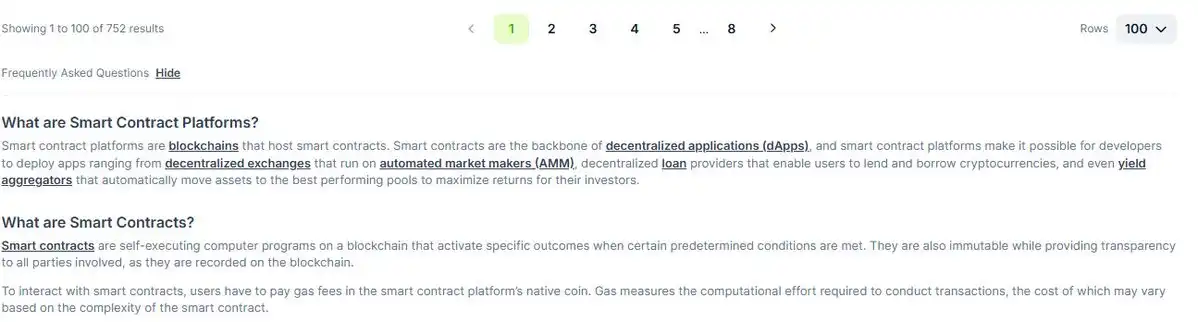
Unsurprisingly, most of their charts look like this—making Ethereum's chart look relatively good in comparison:
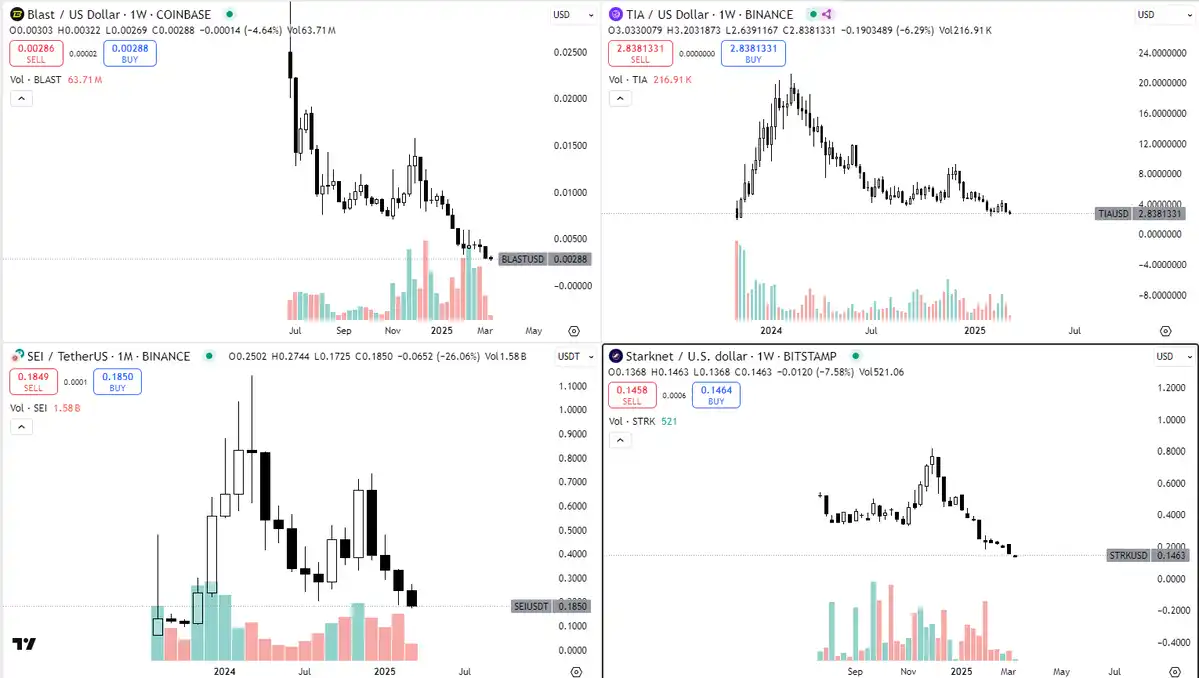
Therefore—despite four years of effort, billions of dollars poured in, over 700 different blockchains, only a few L1s exhibit decent activity—and even those have not reached the "breakthrough level of user adoption" that everyone expected four years ago.
Why? Because most of these projects were built on the wrong premise. As Luca Netz pointed out in his article "What is Consumer Cryptography," many of today's blockchains follow a generic approach, with each blockchain dreaming that they will "power the Internet economy."

However, this takes a tremendous effort, ultimately leading to fragmentation rather than penetration, as a product trying to do everything usually ends up doing nothing well. This is an effort that costs too much money and time—frankly, many blockchains struggle to answer a simple question: "Why should we choose you over blockchain number 60?"
The L1 space is another case of everyone following the same script but expecting a different result—they compete for the same limited developer resources, trying to outdo each other in funding, hackathons, developer homes, and now, apparently, we are still making phones (?)
Let's assume an L1 succeeds. Each cycle, a few L1s manage to break through. But can this success be sustained? The success story of this cycle is Solana. But here is a viewpoint that many of you won't like: what if Solana becomes the next Ethereum?
During the last cycle, there were people so convinced of Ethereum's success that they put most of their net worth into Ethereum. Ethereum still has the highest TVL chain, and now there's even an ETF—however, the price remains stagnant. This cycle, the same type of people are saying the same things—Solana is the chain of the future, Solana ETF, and so on.
If history is any indication, the real question is—can today's victory ensure tomorrow's relevance?
My view is simple: rather than building a general-purpose blockchain, L1s should build around a core focus that is more meaningful. A blockchain does not need to be all things to all people. It just needs to excel in a particular area. I believe the future is blockchain-agnostic—it just needs to excel, and the technical details won't matter as much.
Today, builders are already showing signs of this—founders building a DApp are mainly concerned not with the speed of the chain but with the distribution of the chain and end-user consumption—Is your chain being used? Does it have the necessary distribution to make the product appealing?
44% of web traffic runs on WordPress, but its parent company Automattic is valued at only $7.5 billion. 4% of internet traffic runs on Shopify, but its valuation is $120 billion—that's 16 times Automattic's value! I believe L1s will also reach a similar end state, where value will accrue to applications built on the blockchain.
To that end, I believe L1s should take a bold step and build their own ecosystem. If we analogize blockchain to a city (thanks to Haseeb's post in 2022), we can see that cities started because specific advantages made them viable economic and social centers, then over time, they focused on a dominant industry or function:
· Silicon Valley → Technology
· New York → Finance
· Las Vegas → Entertainment and Hospitality
· Hong Kong and Singapore → Trade-Centric Financial Hubs
· Shenzhen → China's Hardware Manufacturing and Technology Innovation Hub
· Paris → Fashion, Art, and Luxury Goods
· Seoul → K-pop, Entertainment, and Beauty Industry
L1 follows the same pattern — demand is driven by the allure and activity they offer; hence, teams must start focusing more on excelling in a particular vertical — crafting the kind of allure that draws people into their ecosystem rather than building various expos hoping for users to be drawn in.
Once you have that allure that draws people into the ecosystem, you can build a city around it. Again, Hyperliquid is an example of a team doing this well and iterating on first principles in this regard. They built a native sustainable DEX order book, spot DEX, staking, oracle, multisig — all built in-house, then extended to HyperEVM, a smart contract platform for people to build on.
Here's why it is effective broken down simply:
· Starting with "Building the Allure" First: By first building a perpetual trading product, Hyperliquid attracted traders and liquidity before expanding.
· Owning the Stack: Having critical infrastructure (oracle, staking) reduced vulnerabilities and created a moat.
· Ecosystem Synergies: HyperEVM now serves as a playground for developers, leveraging Hyperliquid's existing user base and liquidity.
This "Allure First, City Second" pattern mirrors successful web2 platforms (e.g., Amazon starting from books and then expanding into everything else). Solve an exceptionally well problem, then let the ecosystem organically expand from that core value.
Therefore, I believe blockchain should start integrating its products, building its own allure, owning the stack; as a captain, you are a visionary — this allows you to align your blockchain with your larger, long-term vision for L1; and ensure the project doesn’t immediately give up when chain activity begins to decline because everything is built internally;
Most importantly, this process has brought fungibility to your token—if the blockchain is the city, the token is the currency/good people transact with; by imbuing value into the token through utility—people need to buy your token to do interesting things on-chain. It gives value to your currency and gives people a reason to hold it.
Oh, but remember—just because you specialize, it doesn't mean there's a market demand for it. Another bitter pill to swallow is that L1 has to work in the right way at the right time. The blockchain has to develop products that people want—sometimes, people don't truly want 'web3 games' or 'more data availability.'
Liquidity Tokens & Investor Relations
The next topic is about how I believe liquidity token projects should evolve in this space. Quite simply—liquidity token projects need to start establishing Investor Relations (IR) roles and quarterly reports, allowing investors—whether retail or professional—to see clearly what the company is up to. This role is not novel nor revolutionary—but severely lacking in this space.
However, the space does little in terms of IR. I've been told by several project Biz Dev leads that if you have some kind of 'regular sales call pitching your liquidity token to funds,' you're doing more than 99% of the other projects in this space.
Biz Dev is cool for attracting builders and ecosystem funds, but IR roles telling the public what the token does are better—really that simple. If you're a token looking to attract buyers, you need to market yourself—and the way you do that is not by renting the biggest booth at a conference or advertising at airports but by pitching yourself to capital-rich buyers.
By providing quarterly growth updates, you start showing investors that the product is legitimate and can accrue value—allowing investors to speculate on the long-term prospects of the product.
As for how you should go about it—a good starting list:
· Reports discussing quarterly expenses/revenue, protocol upgrades, numbers, but no MNPI—published on blog/website
· Monthly interfacing with liquidity fund managers, discussing your product/pitching yourself
· Hosting more AMAs
Buybacks and Burns Aren't Bad, but Not Ideal Either
Lastly, I want to discuss buybacks and burns in this space. My take is: if that money has no other purpose, I think buybacks and burns are a decent use. From my perspective, crypto has not yet reached a point where companies can rest on their laurels; there is much to be done in terms of growth.
The first and most important use of revenue should always be to expand the product, upgrade technology, and enter new markets. This is consistent with driving long-term growth and building a competitive advantage; a good example of this is the acquisition spree by Jupiter, as they have been using cash to acquire assets, products, and key talent in the space.
While I know some people like buybacks and burns and will call for dividends, my view is that most crypto operates more akin to tech stocks, as the investor base is similar in nature: seeking high returns, investors are looking for outsized returns.
As such, companies returning value directly to token holders via dividends doesn't make much sense—they could, but if they build a larger moat with cash reserves that serve them in 5 to 10 years, they would benefit greatly from the product.
Crypto is now at the cusp of entering the mainstream—so slowing down now makes no sense; rather, doubling down in cash to ensure the next winner is ahead for a longer time frame is key because although all prices are down, crypto institutional settings have never been better—adoption of stablecoins, blockchain technologies, tokenization, and so on.
Thus, buybacks and burns, while much better than just cashing out, are still not the most effective use of capital considering how much work is left to be done.
Conclusion
This bear market has already started to make people realize the necessity of building revenue-generating products as a path to profitability and the inevitable need to play a legitimate investor relations role in showcasing token performance.
There's still much work to be done in this space. I remain optimistic about the future of crypto.
You may also like

WEEX New Navigation: Trade Faster, Find Trends, Copy Top Traders Instantly
TL;DRYou can now discover trending trading pairs faster with dedicated Spot and Futures themes.The platform automatically resumes your last viewed trading pair so you never lose your place.Simply hover over Copy Trade to see top-performing traders from the past three weeks.This upgrade is rolling out now to all WEEX users. Trading Slows You Down? Here’s How We Fix ItEvery tap, scroll, and menu click steals seconds from your trading. Missed trends. Lost progress. Hidden copy traders. Scattered asset views. That’s why WEEX rebuilt the top navigation — to remove every speed bump. Now you can catch trending pairs before they run, pick up exactly where you left off, find top-performing copy traders in one hover, and check your wallet without digging through menus. Less friction, faster decisions. 5 Navigation Boosts That Make You Trade SmarterHere’s what changed and why it matters for your daily trading:Trending Spot & Futures themes: Switch market themes and spot high-momentum pairs instantly. No more hunting.Auto-resume last pair: WEEX remembers your last viewed pair. Come back anytime, keep trading.One-hover copy trader discovery: Hover over Copy Trade to see top 3-week traders. Click into their pages instantly.Wallet shortcut in main navigation: One click to check balances, deposits, and withdrawals.Combined language & currency selector: View and switch both settings together. Personalize in seconds. Who Gets the Biggest Speed Gains?Everyone wins, but high-frequency and copy traders see the biggest efficiency jump.New traders learn faster — clean layout and visible copy trading lowers the barrier.Active spot & futures traders save minutes per session with auto-resume and trending filters.Copy trading followers find top performers in one hover instead of multiple clicks.Frequent asset movers love the Wallet shortcut for quick deposits and balance checks.Find New Navigation Features in Two ClicksHere's how you can find the new navigation features on WEEX homepage within a few clicks:Log in and look at the top bar (Spot, Futures, Copy Trade, Wallet, globe icon).Hover Copy Trade → see top 3-week traders.Click Spot or Futures → your last viewed pair loads automatically.Click the globe → switch language and currency side by side.Click Wallet → view all assets instantly. Start Trading Smarter — It’s Live NowThese upgrades are available now. No settings to enable. No extra cost.👉 Try the new WEEX navigation nowTrade faster. Miss less. WEEX. Thank you for trading with WEEX About WEEXFounded in 2018, WEEX has developed into a global crypto exchange with over 6.2 million users across more than 150 countries. The platform emphasizes security, liquidity, and usability, providing over 1,200 spot trading pairs and offering up to 400x leverage in crypto futures trading. In addition to the traditional spot and derivatives markets, WEEX is expanding rapidly in the AI era delivering real time AI news, empowering users with AI trading tools, and exploring innovative trade to earn models that make intelligent trading more accessible to everyone. Its 1,000 BTC Protection Fund further strengthens asset safety and transparency, while features such as copy trading and advanced trading tools allow users to follow professional traders and experience a more efficient, intelligent trading journey.Follow WEEX on social mediaX: @WEEX_OfficialInstagram: @WEEX ExchangeTiktok: @weex_globalYoutube: @WEEX_OfficialDiscord: WEEX CommunityTelegram: WeexGlobal Group

Morning Report | Musk's xAI launches Skills; Duan Yongping to first build position in Circle in Q1 2026; Polymarket partners with Nasdaq to launch prediction market

Vitalik: What is the key to the next phase of Ethereum?

Interlace: A global leader in Agentic Payment and stablecoin infrastructure platform, building the next generation of digital financial foundation

Duan Yongping establishes a position in a cryptocurrency company for the first time: Why Circle?

Recovering cryptocurrency assets is a lucrative business that quietly makes a fortune

Gemini 3.5 is here! Tonight, Google personally eliminates Google
Harvard and other institutions are liquidating their assets, and six core talents have left in a month. What is happening with Ethereum?
The tokenized market will reach a trillion-dollar scale, but there are still four major obstacles

Founder of Baixing.com: We have transformed from leaders in AI to guides in AI

The AI stock god who made 60 times profit bets 7.7 billion dollars on Nvidia reaching its peak

WEEX Crypto Pizza Day: Join Us in Dubai for a Slice of Crypto History

WEEX P2P now supports KES—Merchant Recruitment Now Open

WEEX P2P now supports COP—Merchant Recruitment Now Open
Dialogue with Lead Bank Founder Jackie: American Banks Re-embrace Crypto

Vitalik: What we need to do is not to fight against AI, but to create a sanctuary

Morning News | VanEck and Grayscale submitted BNB ETF amendments on the same day; BlackRock discusses investing billions of dollars in SpaceX's IPO; Michael Saylor releases Bitcoin Tracker information again

Crypto ETF Weekly | Last week, the net outflow of Bitcoin spot ETFs in the United States was $995 million; the net outflow of Ethereum spot ETFs in the United States was $255 million
WEEX New Navigation: Trade Faster, Find Trends, Copy Top Traders Instantly
TL;DRYou can now discover trending trading pairs faster with dedicated Spot and Futures themes.The platform automatically resumes your last viewed trading pair so you never lose your place.Simply hover over Copy Trade to see top-performing traders from the past three weeks.This upgrade is rolling out now to all WEEX users. Trading Slows You Down? Here’s How We Fix ItEvery tap, scroll, and menu click steals seconds from your trading. Missed trends. Lost progress. Hidden copy traders. Scattered asset views. That’s why WEEX rebuilt the top navigation — to remove every speed bump. Now you can catch trending pairs before they run, pick up exactly where you left off, find top-performing copy traders in one hover, and check your wallet without digging through menus. Less friction, faster decisions. 5 Navigation Boosts That Make You Trade SmarterHere’s what changed and why it matters for your daily trading:Trending Spot & Futures themes: Switch market themes and spot high-momentum pairs instantly. No more hunting.Auto-resume last pair: WEEX remembers your last viewed pair. Come back anytime, keep trading.One-hover copy trader discovery: Hover over Copy Trade to see top 3-week traders. Click into their pages instantly.Wallet shortcut in main navigation: One click to check balances, deposits, and withdrawals.Combined language & currency selector: View and switch both settings together. Personalize in seconds. Who Gets the Biggest Speed Gains?Everyone wins, but high-frequency and copy traders see the biggest efficiency jump.New traders learn faster — clean layout and visible copy trading lowers the barrier.Active spot & futures traders save minutes per session with auto-resume and trending filters.Copy trading followers find top performers in one hover instead of multiple clicks.Frequent asset movers love the Wallet shortcut for quick deposits and balance checks.Find New Navigation Features in Two ClicksHere's how you can find the new navigation features on WEEX homepage within a few clicks:Log in and look at the top bar (Spot, Futures, Copy Trade, Wallet, globe icon).Hover Copy Trade → see top 3-week traders.Click Spot or Futures → your last viewed pair loads automatically.Click the globe → switch language and currency side by side.Click Wallet → view all assets instantly. Start Trading Smarter — It’s Live NowThese upgrades are available now. No settings to enable. No extra cost.👉 Try the new WEEX navigation nowTrade faster. Miss less. WEEX. Thank you for trading with WEEX About WEEXFounded in 2018, WEEX has developed into a global crypto exchange with over 6.2 million users across more than 150 countries. The platform emphasizes security, liquidity, and usability, providing over 1,200 spot trading pairs and offering up to 400x leverage in crypto futures trading. In addition to the traditional spot and derivatives markets, WEEX is expanding rapidly in the AI era delivering real time AI news, empowering users with AI trading tools, and exploring innovative trade to earn models that make intelligent trading more accessible to everyone. Its 1,000 BTC Protection Fund further strengthens asset safety and transparency, while features such as copy trading and advanced trading tools allow users to follow professional traders and experience a more efficient, intelligent trading journey.Follow WEEX on social mediaX: @WEEX_OfficialInstagram: @WEEX ExchangeTiktok: @weex_globalYoutube: @WEEX_OfficialDiscord: WEEX CommunityTelegram: WeexGlobal Group
Morning Report | Musk's xAI launches Skills; Duan Yongping to first build position in Circle in Q1 2026; Polymarket partners with Nasdaq to launch prediction market
Vitalik: What is the key to the next phase of Ethereum?
Interlace: A global leader in Agentic Payment and stablecoin infrastructure platform, building the next generation of digital financial foundation
Duan Yongping establishes a position in a cryptocurrency company for the first time: Why Circle?
Recovering cryptocurrency assets is a lucrative business that quietly makes a fortune