
 Buy Crypto
- Markets
 Futures
- Spot
- Copy Trade
- Earn
- More
After TACO Ceasefire, Iran War is Just on Pause

Original Title: Trump's Ceasefire Still Leaves the US and Iran Mired in Quandary
Original Authors: Catherine Lucey, Courtney Subramanian, Eric Martin, and Jennifer A Dlouhy, Bloomberg
Translation: Peggy, BlockBeats
Editor's Note: From the "Stone Age" threat to the rapid implementation of a two-week ceasefire, the conflict surrounding Iran has undergone a dramatic reversal in a short period of time. On the surface, the situation has cooled down, the market has rebounded, but the deeper structural issues have not been resolved.
On the one hand, Donald Trump, under political and economic pressure, chose to "de-escalate," temporarily easing market and ally anxieties through the ceasefire; on the other hand, Iran has instead strengthened its control of the Strait of Hormuz during the conflict and attempted to turn this geopolitical advantage into a long-term bargaining chip. The so-called "ceasefire" is more like a time-for-space arrangement rather than a true resolution of the issue.
At the same time, domestic divisions in the United States are deepening. Within the Republican Party, there is a clear rift over whether to cross the war threshold, whether to accept an agreement that falls far short of the core objectives. From the market's violent fluctuations to the repeated policy swings, this crisis has not only exposed a highly personalized decision-making mechanism but has also led the world to reevaluate America's credibility and execution capability.
Unable to determine a clear winner, the conflict is entering a more complex stage: military deterrence, energy games, and political negotiations are advancing in tandem. The real issue is no longer "whether to cease fire," but in a situation where all sides' bottom lines remain firm, how this game will be repriced.
The following is the original text:
President Donald Trump has two weeks to determine whether he has untied the knot he personally tied on the Iran issue or instead tightened it further.
He announced on Tuesday that he accepted a two-week ceasefire proposal with Iran, a move that relieved major global capitals and sent financial markets into a frenzy. At least for now, people have temporarily set aside concerns that he would continue to push for attacks on civilian infrastructure and drag the region into a deeper conflict through a bombing campaign he once described as wanting to "blast Iran back to the Stone Age."
However, beneath the celebratory atmosphere of another TACO Tuesday, this president, known for pulling back at the last moment, again retreated to the cliff's edge. A more realistic understanding also emerged: none of the most critical issues have actually been resolved.
Note: "Taco Tuesday" is a cultural meme. In the United States, many restaurants offer discounts on tacos on Tuesdays, leading "Taco Tuesday" to become a lighthearted, celebratory, and somewhat entertaining expression.
One key unresolved issue is whether the Strait of Hormuz has indeed reopened for oil tankers. While Iran has sent some ambiguous signals suggesting it may allow more vessels through this waterway, the reality remains uncertain.
Iran has shown little willingness to accept U.S. demands in full, whether to weaken the current regime or support a pro-U.S. leadership as in Venezuela. At the same time, Tehran has not committed to meeting Trump's two core demands: permanently abandoning its nuclear program and completely dismantling its ballistic missile systems. Moreover, the U.S. president previously threatened to "obliterate Iran's civilization," a statement that itself may have crossed the threshold into war crimes if carried out.
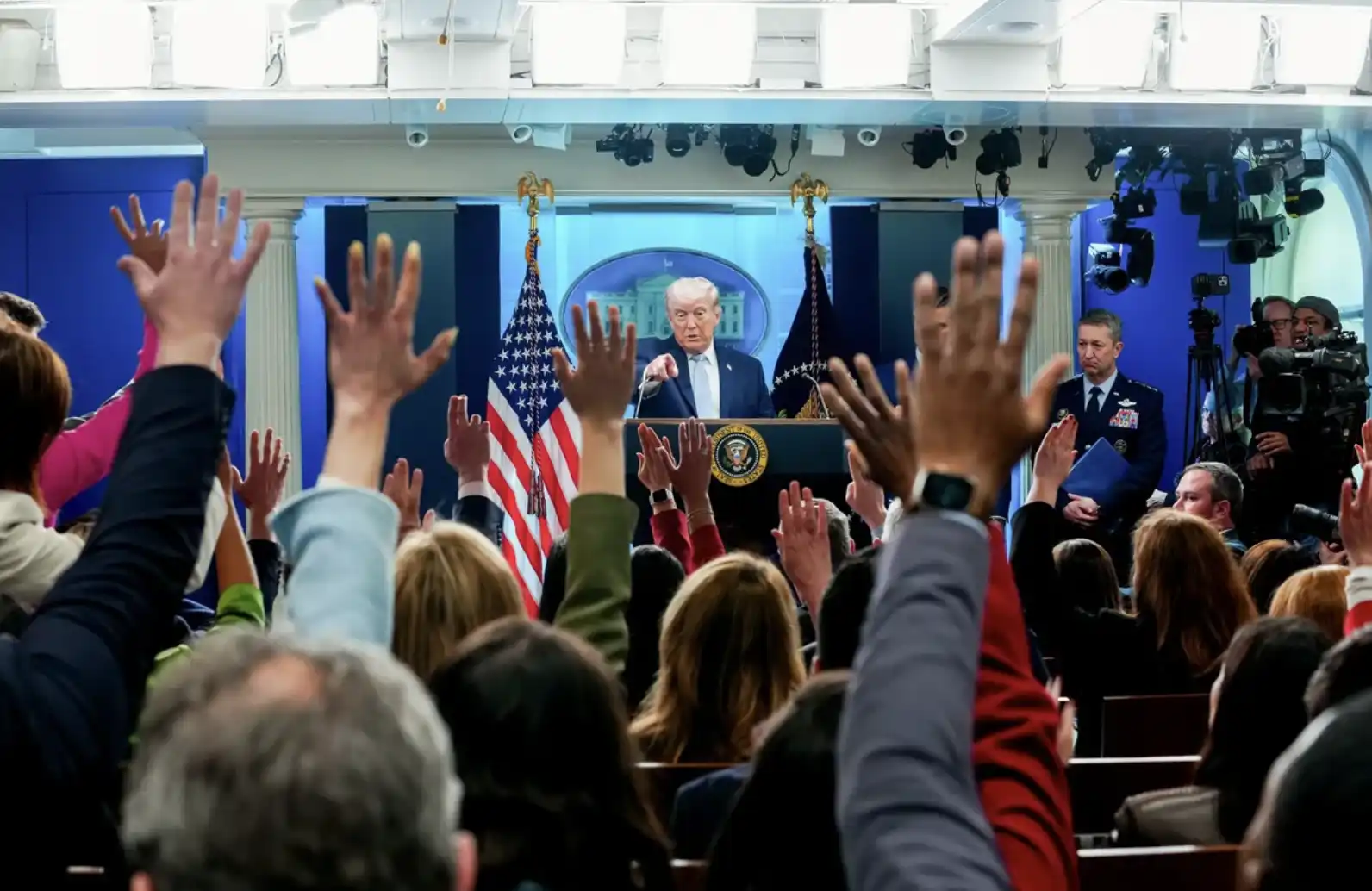
On April 6, U.S. President Donald Trump holds a press conference at the White House. (Photo: Aaron Schwartz / CNP / Bloomberg)
Meanwhile, Trump has confirmed that Iran's proposed "Ten-Point Plan" will serve as the basis for future negotiations. Tehran had previously demanded sanctions relief and compensation for the damages caused by the war. This could also imply imposing new fees on vessels passing through the Strait of Hormuz, thereby keeping shipping costs and energy prices elevated for an extended period.
From a practical standpoint, for a U.S. president under significant pressure politically and economically, in need of finding a way out, even if these goals cannot be fully achieved, he may have to accept them.
"Trump clearly wants to kick the can down the road once again, which is not surprising," said Ian Bremmer, Founder of Eurasia Group.
According to a senior government official who requested anonymity, as the final deadline approached on Tuesday night at 8 p.m., the White House deliberately created an "unsettled" atmosphere. Part of the reason was the president's own request for his advisory team not to release any signals, allowing the outside world to speculate on his next steps. At the same time, the U.S. intensified its strikes on Iranian military targets, including its main oil export hub, Kharg Island, to enhance U.S. leverage in negotiations and demonstrate its military capabilities.
According to a White House official, despite being in Hungary meeting Viktor Orbán at the time, US Vice President JD Vance still played a key role in Tuesday's decision-making process. At one point, a scene unfolded where Vance patched in Donald Trump via conference call during a rally with Orbán; meanwhile, the official also noted that the Vice President had privately communicated directly with a Pakistani official acting as a mediator.
The official added that Trump spent the day in continuous consultation with US national security officials and Israeli Prime Minister Benjamin Netanyahu, ultimately speaking to a Pakistani army general to confirm the ceasefire plan.
Simultaneously, the West Wing was abuzz with the release of a report. The report revealed deep skepticism within the Trump administration's top ranks toward the Israeli perspective before the outbreak of war, specifically believing that a military strike could spark an uprising in Iran and bring about a new secular government. The report also exposed Vance's initial opposition to the strike action and the private concerns expressed by other senior aides.
Against this backdrop, for much of Tuesday, allies from within the Trump political coalition issued warnings to him, advising against following through on his earlier extreme threat to "end the Persian civilization." Conservative podcast hosts even openly discussed whether the cabinet should consider removing Donald Trump from office; even Republican lawmakers on Capitol Hill, who have traditionally supported him, indicated that his threats to strike power plants and desalination facilities had crossed a line.
Although the Republican Party, led by Trump, won a special election in Georgia that day, the victory margin in what has always been considered a "safe seat" significantly narrowed, seen as a potential signal of voter discontent.
Meanwhile, economic pressure continued to mount. Since the end of February when the conflict erupted, the price of West Texas Intermediate (WTI) crude oil has surged by nearly 70%, driving gas station prices to cross $4 per gallon for the first time in years.
Within an hour of Trump's announcement of the decision, oil prices plummeted by 11%, highlighting the pent-up anxiety in the market over his policy direction. The S&P 500 Index has fallen about 5.2% from its peak and just posted its worst quarterly performance since 2022.
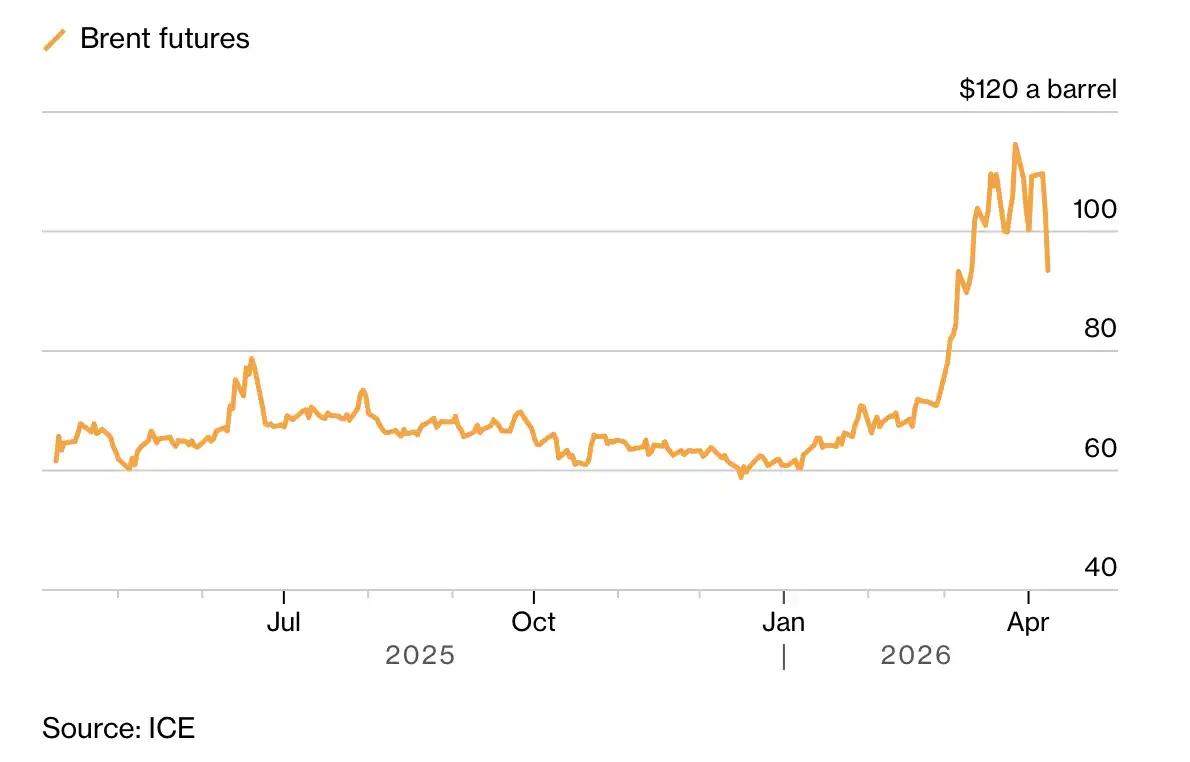
After the US and Iran agreed to a two-week ceasefire, oil prices saw a sharp decline. Brent crude oil fell as much as 16% on Wednesday.
Trump's decision was made at the last minute. According to a U.S. official, it wasn't until late Tuesday afternoon, just about two hours before he announced a ceasefire post on Truth Social, that the President fully heard the proposal put forward by the Pakistani side. Whether to accept this proposal, and whether it met his own set conditions, ultimately depended entirely on Donald Trump himself.
Unknown Details
Despite the President's statement claiming that he had pushed this "long-standing issue to a stage close to resolution," public information indicates little evidence that this military and economic quagmire, which has dealt a severe blow to his political standing, is moving in a direction of true relief.
Defense Priorities military analysis director Jennifer Kavanagh, from the libertarian think tank, wrote on social media, "Tonight, Trump chose to step down, which is indeed a relief. But if he intended to concede from the beginning, then the way can be said to be the worst, constantly raising the stakes before, instead greatly damaging his own reputation, and the outside world's perception of U.S. strength. This is a clear strategic failure."
Within hours of Trump announcing the ceasefire, White House press secretary Karoline Leavitt urged caution in interpreting reports of face-to-face talks, stating that any substantive progress must be based on the President's formal announcement.
Meanwhile, according to Al Jazeera, Iran's proposal included: demanding the withdrawal of U.S. military bases and deployment points in the region, and unfreezing Iran's frozen assets, among others. Whether the U.S. or Israel would accept these conditions seems highly unlikely.
Despite Washington's public scorn for Iran throughout the conflict, believing Tehran to be more flexible in private negotiations, the stark gap between public and private also highlights the deep-seated divisions and mistrust that Trump must currently address.
Jonathan Panikoff pointed out that to achieve a long-term solution, a series of core issues must be addressed: the future of Iran's nuclear and missile program, the destination of its enriched uranium reserves, and the permanent guarantee of freedom of navigation. He said, "With Iran willing to open the Strait of Hormuz, the President accepting a two-week ceasefire indeed found himself a way 'down the stairs', and could claim a phased victory on this basis."
Shortly after the ceasefire was announced, Trump stated in an AFP interview that Iran's uranium reserves would be "handled properly," without specifying the exact manner, while still referring to the agreement as a "comprehensive victory" for the U.S.
Energy Off-Ramp
Throughout his public life, Trump has consistently not been fixated on aligning established goals with reality; in situations where key issues remain unresolved, he has paved the way for his own "retreat" multiple times.
He has previously backtracked on the most radical policies and threats. For example, a year ago, after a significant drop in the financial markets, he quickly made concessions shortly after implementing global tariffs.
This time, the government may hope that: voters have short memories, the economy gradually recovers from the conflict impact, and Iran's retaliation, a point even Trump himself admits was unexpected, can be absorbed over time.
However, if an agreement is ultimately not reached that closely aligns with the president's initial vision, the White House will undoubtedly face serious questioning. Jon Hoffman, a defense and foreign policy researcher at the Cato Institute, said, "Overall, Trump's initial goals were very aggressive, including destroying Iran's nuclear program and even promoting regime change, but neither of these has been achieved."
Connecticut Democratic Senator Chris Murphy warned that if an agreement ultimately solidifies Iran's control of the Strait of Hormuz, it will have "catastrophic consequences" globally. In an interview with CNN, he said, "Now it doesn't even sound like a real agreement has been reached because Trump's statements are completely inconsistent with the Iranian side. If Iran permanently controls the strait as a result, what a serious misjudgment that would be, and how much of a failure this whole operation would appear."
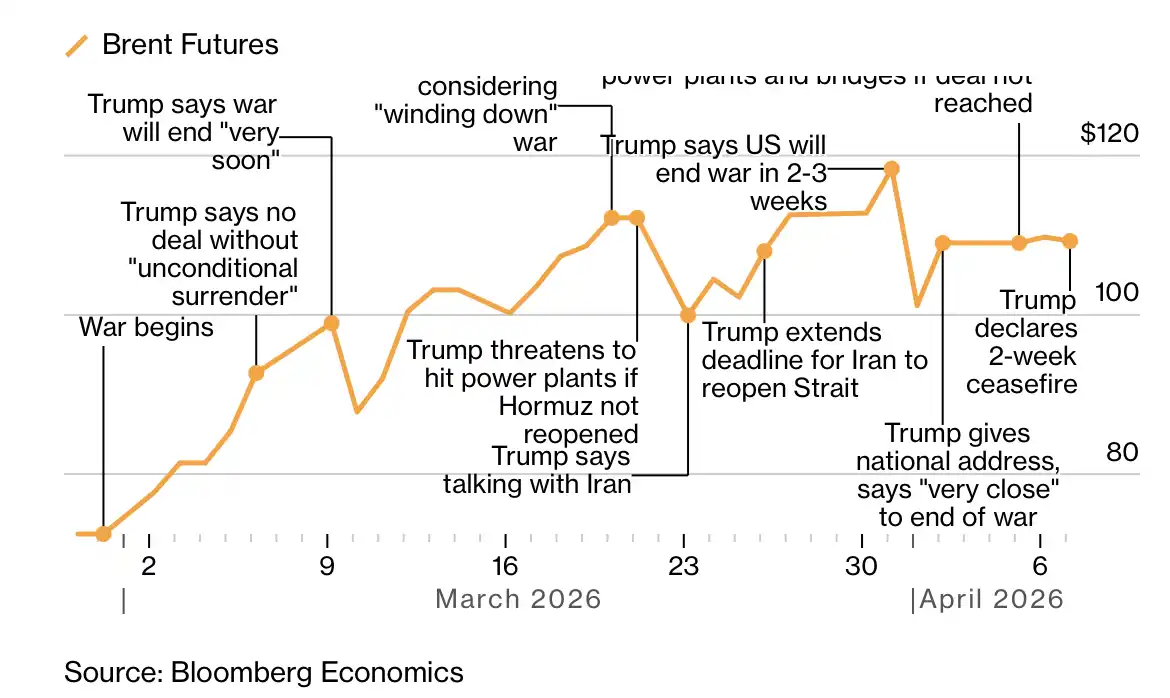
Trump's fluctuating rhetoric. Trump's public statements on the Iran war issue have directly caused severe fluctuations in oil prices multiple times.
Ironically for the United States, a rather ironic reality is that a five-week conflict could potentially give Tehran a larger stake in the global economy. During the conflict, Iran has effectively strengthened its control over the Strait of Hormuz, almost closing it to countries it deems "hostile," and is now pushing a plan to impose a "toll" on oil tankers passing through.
Clayton Seigle, senior researcher at the Washington Institute for Strategic and International Studies, said, "Iran is unlikely to give up its recently acquired or at least reinforced claim to control of the strait."
Kevin Book, Managing Director of ClearView Energy Partners based in Washington, pointed out that the reason the market sees this ceasefire as a significant signal is largely because it includes a commitment to reopen the Strait of Hormuz.
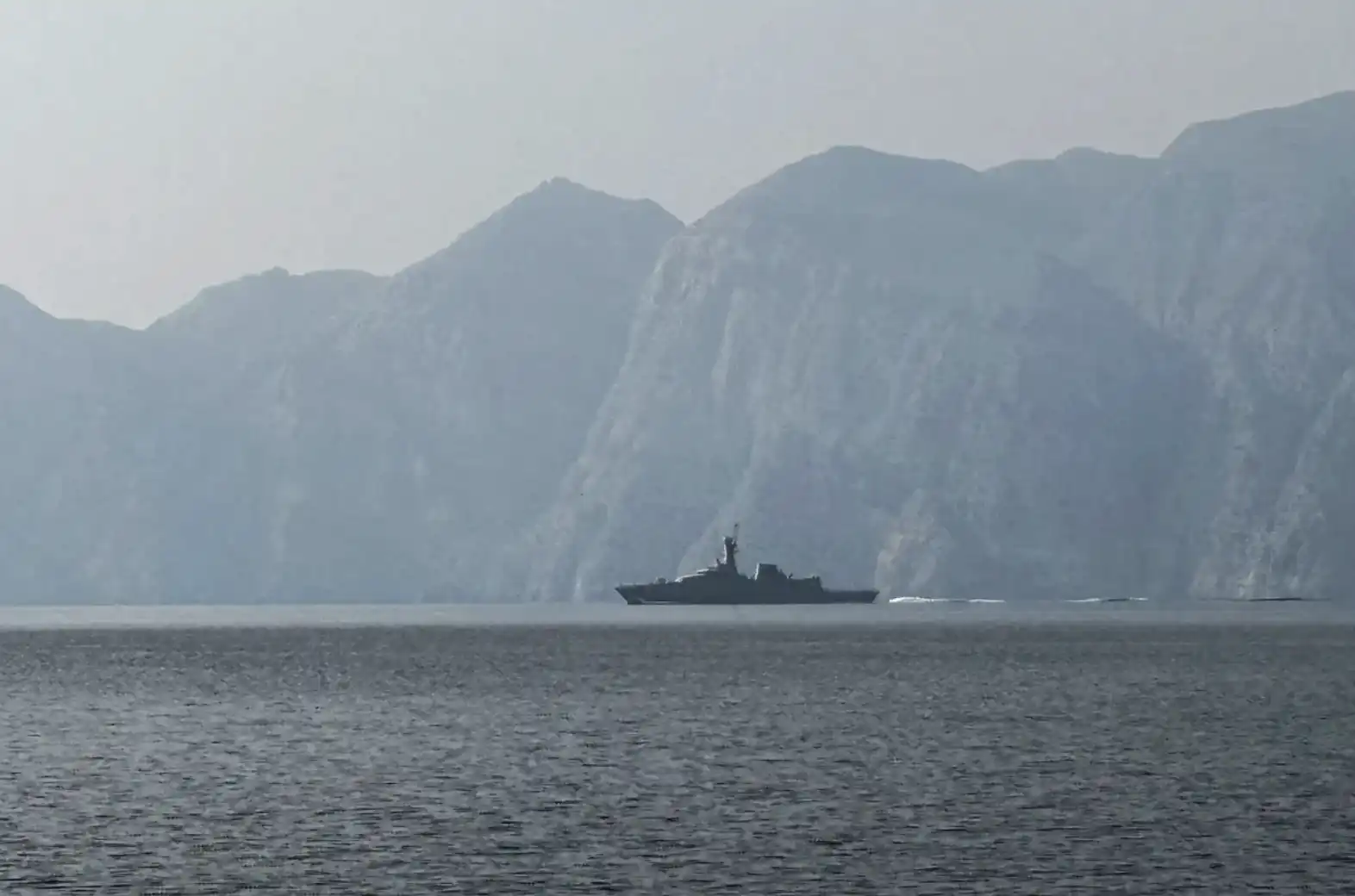
On March 1, 2026, a naval vessel sails through the Strait of Hormuz. (Photo: Sahar Al Attar / AFP / Getty Images)
Meanwhile, the likelihood of a significant short-term drop in oil prices remains low.
Kevin Book, Managing Director of ClearView Energy Partners, said, "The lower end of the oil price range still remains at around $100 per barrel." He added that if Donald Trump had indeed carried out the strike action as threatened, triggering Iranian retaliation, the world could face an "unlimited" surge in oil prices.
GOP Offsides
Trump also needs to mend the divisions within his party exposed on this issue. On Tuesday, significant fault lines emerged within the GOP over whether to take a tougher stance on Iran.
Before the ceasefire, Trump had warned of "a civilization going to ruin tonight." In response, Texas Congressman and Trump endorsee Nathaniel Moran expressed concerns on social media, saying the U.S. was deviating from "longstanding guiding principles of U.S. national defense."
Republican Senator from Wisconsin, Ron Johnson, stated that an attack on civilian infrastructure would be "a huge mistake."
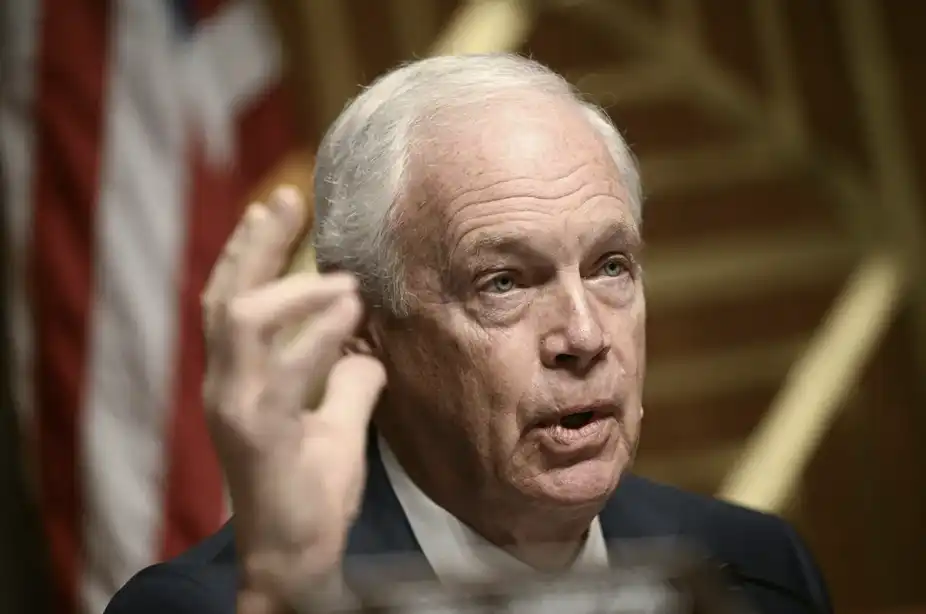
Senator Ron Johnson of Wisconsin. (Photo: Brendan Smialowski / AFP / Getty Images)
"If he attacks civilian targets, I can no longer support him. Whatever action we take must comply with the laws of war," Johnson told The Wall Street Journal in an interview.
He also told podcast host John Solomon on Monday, "I hope and pray that Trump is just bluffing. We are not enemies of the Iranian people; our goal is to 'liberate' them." Some former Trump allies, including Tucker Carlson, former Congresswoman Marjorie Taylor Greene, and former White House official Anthony Scaramucci, have also joined the calls for his removal, citing his previous threats.
And following Trump's shift to de-escalate the situation, conservative opinion leaders Laura Loomer and Senator Lindsey Graham, who were originally key supporters of his hardline action against Iran, began expressing concerns about the ceasefire agreement.
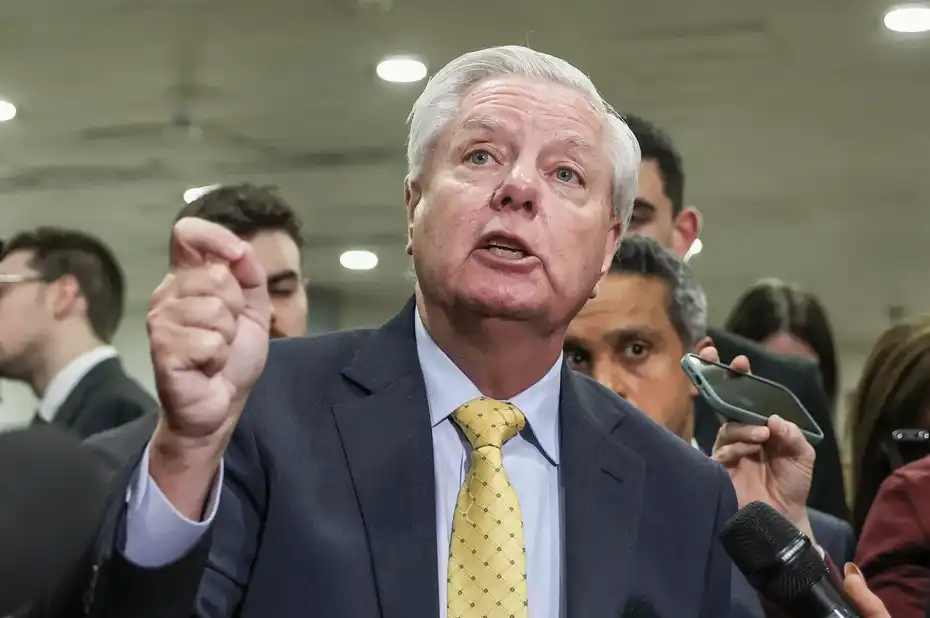
South Carolina Senator Lindsey Graham. (Photo: Anna Moneymaker / Getty Images)
"I don't understand why anyone is treating this as a victory," conservative opinion leader Laura Loomer wrote on social media, "the Muslim community, the so-called 'Woke Reich,' and anti-Trump camp are using this 'negotiation' to attack President Trump, while praising Tucker Carlson's ally and calling for the 25th Amendment to be invoked against Trump."
The Republican Senator from South Carolina stated that Americans "must remember that after the outbreak of war, Iran attacked the Strait of Hormuz, undermining freedom of navigation."
"Next, it is crucial that Iran does not receive any reward for this global hostile act," Graham wrote on social media. He also added that the U.S. must ensure control of "every ounce" of high-enriched uranium in Iran.
"Time will tell," the Senator said.
You may also like

UCL Fan Tokens 2026 Guide: How to Trade UEFA Champions League Crypto with Zero Fees on WEEX
Discover UCL fan tokens like PSG, Barcelona, and Man City. Learn how to trade UEFA Champions League crypto with zero fees and earn rewards on WEEX.

WEEX Poker Party Season 2: Check How to Earn Crypto Rewards Now!
Learn how WEEX Poker Party Season 2 (Joker Card Event) works. Discover rules, scoring, rewards, and strategies to earn crypto rewards through gamified trading.

Yu Weiwen: Steady Development of Hong Kong's Compliant Stablecoin Ecosystem

The 17-Year Mystery Will Be Solved, Who is Satoshi Nakamoto?

5 Minutes to Make AI Your Second Brain

Uniswap is trapped in an innovation dilemma

What is the key to competition in crypto banking?

The flow of stablecoins and the spillover effects in the foreign exchange market

After two years, Hong Kong's first batch of stablecoin licenses finally issued: HSBC, Standard Chartered make the cut
The person who helped TAO rise by 90% has now single-handedly crashed the price again today

3-Minute Guide to Participating in the SpaceX IPO on Bitget

Top 5 Cryptos to Buy in 2026 Q1: A ChatGPT Deep Dive Analysis
Explore the top 5 cryptos to buy in Q1 2026 including BTC, ETH, SOL, TAO, and ONDO. See price outlooks, key narratives, and institutional catalysts shaping the next market move.

How to Earn $15,000 with Idle USDT Before Altcoin Season 2026
Wondering if altcoin season is coming in 2026? Get the latest market update, and learn how to turn your idle stablecoins waiting for entry into extra rewards up to 15,000 USDT.
Can You Win Joker Returns Without Large Trading Volume? 5 Mistakes New Players Make In WEEX Joker Returns Season 2
Can small traders win WEEX Joker Returns 2026 without huge volume? Yes—if you avoid these 5 costly mistakes. Learn how to maximize card draws, use Jokers wisely, and turn small deposits into 15,000 USDT rewards.

Altcoin Season 2026: 4 Stages to Profit (Before the Crowd FOMO In)
Altcoin Season 2026 is starting — discover the 4 key stages of capital rotation (from ETH to PEPE) and how to position before the peak. Learn which tokens will lead each phase and avoid missing the rally.

Will Alt season come in 2026? 5 Tips to Spot the Next 100x Crypto Opportunities
Will altcoin season arrive in 2026? Discover 5 rotation stages, early signals smart traders watch, and the key crypto sectors where the next 100x altcoin opportunities may emerge.

The bear market has arrived, and cryptocurrency ETF issuers are also getting involved

The richest man had a quarrel with his former boss
UCL Fan Tokens 2026 Guide: How to Trade UEFA Champions League Crypto with Zero Fees on WEEX
Discover UCL fan tokens like PSG, Barcelona, and Man City. Learn how to trade UEFA Champions League crypto with zero fees and earn rewards on WEEX.
WEEX Poker Party Season 2: Check How to Earn Crypto Rewards Now!
Learn how WEEX Poker Party Season 2 (Joker Card Event) works. Discover rules, scoring, rewards, and strategies to earn crypto rewards through gamified trading.


 App
App